


Table of Contents
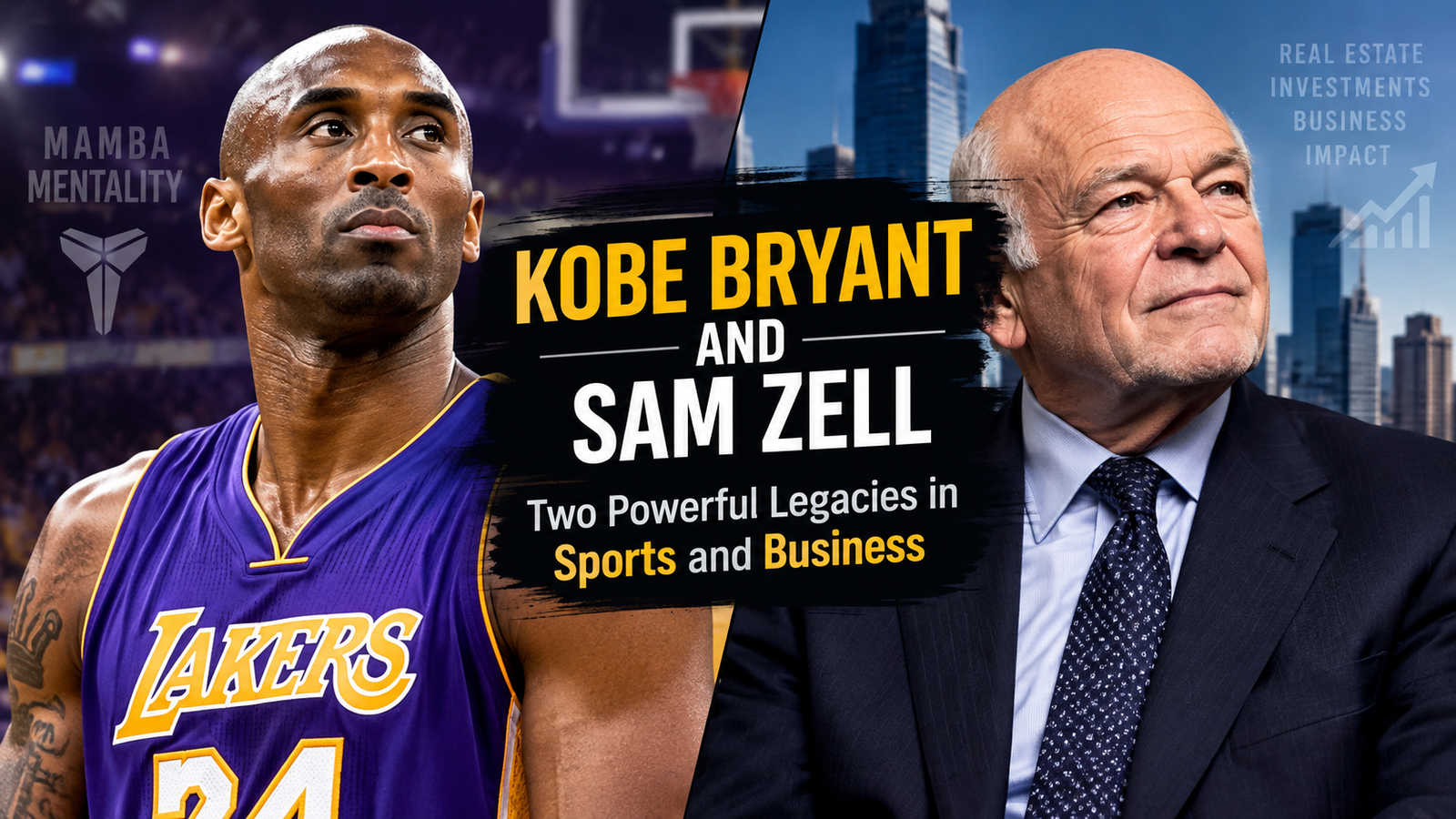
The names Kobe Bryant and Sam Zell come from two very different worlds. Bryant became one of the most recognizable basketball players in modern history, spending his entire 20-year NBA career with the Los Angeles Lakers. Zell, meanwhile, built his reputation as an entrepreneur, investor, and real-estate pioneer whose career stretched across decades and industries. At first glance, putting the two names together may seem unusual. One represents elite athletic competition and global sports culture, while the other represents investment, entrepreneurship, property, and corporate deal-making.
Yet there is something genuinely interesting about comparing them. Both men developed reputations around intense competition, confidence, risk-taking, and an unwillingness to accept ordinary results. Their professional environments were radically different, but both understood that long-term success requires more than talent or money. Bryant had to transform extraordinary physical ability into a sustainable championship career. Zell had to turn opportunities in uncertain markets into businesses and investments capable of producing lasting value.
That distinction is important because there is no strong evidence establishing a major direct professional partnership between Kobe Bryant and Sam Zell. Reliable biographies and institutional sources document their careers separately. Bryant’s official basketball records focus on his Lakers career, championships, Olympic achievements, and Hall of Fame legacy, while sources covering Zell concentrate on his investment companies, real estate activities, corporate leadership, and entrepreneurial philosophy.
The most useful way to understand the phrase “Kobe Bryant and Sam Zell” is therefore not to invent a connection that may not exist, but to examine why two highly accomplished personalities can be compared and what their individual stories reveal about ambition, discipline, risk, leadership, and legacy.
Why Kobe Bryant and Sam Zell Are Being Discussed Together
Two Different Worlds, One Fascinating Comparison
Kobe Bryant and Sam Zell belonged to completely different professional ecosystems. Bryant’s scoreboard was literal: points, wins, championships, awards, defensive assignments, and playoff performances. Zell’s scoreboard was financial and strategic: property values, investments, corporate ownership, capital structures, acquisitions, and business performance. One spent his career under the bright lights of arenas, while the other spent much of his career studying markets, assets, companies, and opportunities.
That contrast is precisely what makes the comparison interesting. People often assume that success has a single formula, but the careers of Bryant and Zell suggest otherwise. A professional athlete and a billionaire investor do not need the same skills, yet they can share certain underlying habits. Both need the ability to tolerate pressure. Both need confidence without becoming blind to reality. Both need to make decisions when the outcome is uncertain, and both need to keep learning when circumstances change.
Bryant’s career provides an obvious example of sustained performance. The Naismith Memorial Basketball Hall of Fame records him as a five-time NBA champion, 18-time All-Star, 2008 NBA MVP, and two-time Finals MVP. He also earned 11 All-NBA First Team selections and scored 33,643 regular-season points.
Zell’s career followed a different path but was similarly extensive. Equity Commonwealth described him as the chairman of several major companies and credited him with founding Equity Group Investments more than five decades before his death in 2023. His investment career covered real estate and numerous other industries, while his influence became particularly associated with the development of the modern REIT industry.
Who Was Kobe Bryant?
Kobe Bryant was born on August 23, 1978, in Philadelphia and became a professional basketball player directly out of high school. He entered the NBA in 1996 and was selected by Charlotte before being traded to the Los Angeles Lakers. He eventually became one of the central figures of the Lakers organization and one of the defining basketball stars of his generation.
Bryant’s story is unusual even within professional sports. Many talented players have spectacular seasons, but Bryant maintained an elite level for two decades. The Lakers’ official biography records that he spent all 20 of his NBA seasons with Los Angeles, won five championships, earned one regular-season MVP award, two Finals MVP awards, and appeared in 18 All-Star Games.
His career also included some extraordinary individual performances. Bryant scored 81 points against the Toronto Raptors in January 2006, one of the highest-scoring games in NBA history. In his final NBA game in April 2016, he scored 60 points against the Utah Jazz, ending his playing career with a performance that became part of NBA folklore.
Kobe Bryant’s Rise to Basketball Greatness
Bryant’s rise was not simply the result of athletic ability. He developed a reputation for obsessive preparation and an extraordinary willingness to work on small details. His career became closely associated with the idea that elite performance comes from repeatedly practicing skills until they become dependable under pressure.
The concept later known as the Mamba Mentality became a major part of Bryant’s public identity. It was not simply about scoring points or appearing confident. At its best, the idea represented preparation, resilience, competitive focus, and the pursuit of improvement. That philosophy helped Bryant become more than a talented young player; it helped him develop into a veteran capable of adapting his game as his athletic abilities changed.
The Basketball Hall of Fame describes Bryant as a player whose physical gifts were elevated by his mindset, work ethic, and relentless competitive approach.
That is one reason Bryant’s influence eventually extended far beyond basketball. Young athletes, entrepreneurs, coaches, students, and business professionals began using his career as an example of deliberate practice and professional discipline.
Who Was Sam Zell?

Sam Zell was an American entrepreneur and investor whose career became particularly associated with real estate and the investment of capital in opportunities that other investors might consider complicated or unattractive. Born in 1941, he began developing his entrepreneurial instincts at a young age and eventually built a major investment organization.
Zell founded Equity Group Investments, which became the platform through which he pursued investments across multiple sectors. Equity Commonwealth stated that Zell had launched and grown hundreds of companies during a career lasting more than 60 years. He also chaired Equity Residential, Equity LifeStyle Properties, and Equity Commonwealth.
His reputation was built partly on his willingness to look where other investors were uncomfortable looking. He became known by the nickname “Grave Dancer,” reflecting his strategy of seeking opportunities in distressed assets and difficult markets. His approach was not simply about buying popular investments at high prices. Instead, he became known for studying situations where he believed the market had misunderstood the underlying value.
Sam Zell’s Early Entrepreneurial Journey
Zell’s entrepreneurial story began before he became a famous investor. According to biographical reporting, he managed apartment properties while attending the University of Michigan and eventually built substantial experience in real estate before establishing Equity Group Investments in 1968.
His early experience helped shape an investment philosophy based on understanding assets rather than simply following fashionable trends. Real estate gave him an environment where he could observe how properties generated income, how management affected value, and how market conditions could create opportunities.
Zell eventually became one of the best-known figures in American real estate investing. His influence extended beyond individual properties because he played an important role in the development of structures that allowed investors to participate in large-scale real estate portfolios.
The Investor Known as the “Grave Dancer”
The nickname attached to Zell’s investment philosophy tells you a great deal about how he viewed risk. He was attracted to situations in which assets were distressed, misunderstood, or undervalued. Rather than seeing difficulty as an automatic reason to walk away, he often viewed it as something that could create opportunity when the underlying economics were sound.
That does not mean every Zell investment succeeded. His career also contained major failures and controversies, including his acquisition of Tribune Company, which later entered bankruptcy during the financial crisis.
This is an important part of understanding Zell. A serious examination of his career should not turn him into a flawless business hero. Successful investors can make enormous mistakes. What separates long-term investors from short-term speculators is often the ability to evaluate risk, learn from mistakes, preserve capital where possible, and continue searching for opportunities.
Kobe Bryant and Sam Zell: Was There a Direct Connection?
This is where caution matters most. Searches for Kobe Bryant and Sam Zell can create the impression that the two men shared a significant business relationship, but the reliable sources reviewed for this article do not establish a major partnership, investment relationship, or notable joint venture between them.
Bryant’s documented professional history centers on the Los Angeles Lakers, basketball, Team USA, his family, media projects, entrepreneurship, and philanthropic activities. The Lakers and Basketball Hall of Fame provide extensive records of his basketball career.
Zell’s documented professional history centers on Equity Group Investments, real estate, REITs, corporate investments, and entrepreneurial education. His companies and institutional biographies provide extensive documentation of those activities.
What Reliable Sources Actually Establish
The safest conclusion is that Kobe Bryant and Sam Zell were two highly successful public figures whose professional histories can be compared, but a major direct connection should not be assumed without a specific primary source.
That distinction may sound small, but it is extremely important for online publishing. Search-driven articles sometimes take two recognizable names and build a narrative around them simply because users search for the names together. That can create misinformation if an assumed relationship is presented as established fact.
For readers, the better approach is to separate documented history from interpretation. It is perfectly reasonable to compare Bryant’s competitive mindset with Zell’s investment philosophy. It is not reasonable to claim they worked together unless reliable evidence confirms it.
Comparing Their Professional Worlds

| Category | Kobe Bryant | Sam Zell |
| Primary field | Professional basketball | Investment and entrepreneurship |
| Main organization associated with career | Los Angeles Lakers | Equity Group Investments |
| Core performance measure | Wins, championships and individual statistics | Investment performance and business value |
| Major strength | Competitive excellence and preparation | Opportunity recognition and capital allocation |
| Major public legacy | Basketball and the Mamba Mentality | Real estate, investing and entrepreneurship |
| Career duration | 20 NBA seasons | More than 60 years in business |
| Hall/industry recognition | Naismith Basketball Hall of Fame | Major influence on modern real estate investing |
The comparison becomes clearer when you look at what each man had to optimize. Bryant needed his body, skills, mind, and team relationships to work together. Zell needed capital, information, management, timing, and market conditions to align. Bryant could influence the result of a game directly through his actions. Zell often had to influence results indirectly by selecting assets, choosing partners, structuring transactions, and making strategic decisions.
Yet both careers demonstrate the value of specialization. Bryant did not become great by trying to master every sport. He became exceptional at basketball. Zell did not build his reputation by randomly chasing every business trend. He developed deep expertise in investment and real estate before expanding into other sectors.
Kobe Bryant’s Impact Beyond the NBA
Bryant’s influence did not stop when he retired from basketball. In fact, his post-playing career showed that his interests extended into storytelling, media, entrepreneurship, and creative work.
His most famous post-basketball achievement came through storytelling and creative production. Bryant won an Academy Award for the animated short film Dear Basketball, demonstrating that his identity could evolve beyond being an athlete. The achievement mattered because it showed how an elite competitor could transfer discipline and creative ambition into an entirely different field.
Bryant also became increasingly interested in mentoring and helping younger athletes. His public work after basketball demonstrated a desire to turn experience into knowledge that others could use.
That transition is significant when comparing him with Zell. Both men eventually became more than practitioners of their original professions. Bryant became a storyteller and entrepreneur, while Zell became a broader investor whose activities crossed multiple industries.
Entrepreneurship, Storytelling, and Brand Building
A strong personal brand can become an asset long after a person’s primary career ends. Bryant understood this remarkably well. The name Kobe Bryant became associated not only with basketball statistics but also with determination, excellence, discipline, and the Mamba Mentality.
This transformation illustrates an important principle for modern professionals: reputation compounds. Every successful project can reinforce the public’s understanding of what a person represents. Bryant’s championships strengthened his reputation as a competitor. His creative projects strengthened his reputation as someone capable of succeeding outside sports.
His basketball achievements were substantial enough to support that brand. USA Basketball records his Olympic gold medals in 2008 and 2012, while his Lakers career included five NBA championships.
Sam Zell’s Influence Beyond Real Estate
Zell’s influence also extended beyond buying and selling property. His career included investments in companies operating in areas such as media, manufacturing, transportation, and consumer products. That diversity reflected his broader interest in identifying situations where capital and management could unlock value.
His influence on real estate structures was especially significant. Equity Group Investments described him as a major figure in the creation of the modern REIT industry, a sector that eventually grew into an enormous part of global investment markets.
Zell also supported entrepreneurial education. Wharton notes that the Samuel Zell and Robert Lurie Real Estate Center was established through his support, reflecting his interest in education and the development of future business leaders.
Entrepreneurship, Media, and Institutional Investing
One of the most interesting aspects of Zell’s career is that he was willing to move between industries. His investment history illustrates how an investor can use transferable skills rather than depending on one particular asset class forever.
His Tribune investment is a useful example because it shows both sides of his career. The transaction demonstrated his willingness to pursue a major and complicated corporate opportunity, but the company eventually filed for bankruptcy in 2008.
That episode makes Zell’s story more useful, not less. Business education becomes shallow when it only studies winners. Real investors have to understand what happens when a thesis fails. Zell’s career provides examples of both aggressive opportunity-seeking and the consequences that can follow when assumptions collide with economic reality.
What Made Kobe Bryant So Successful?
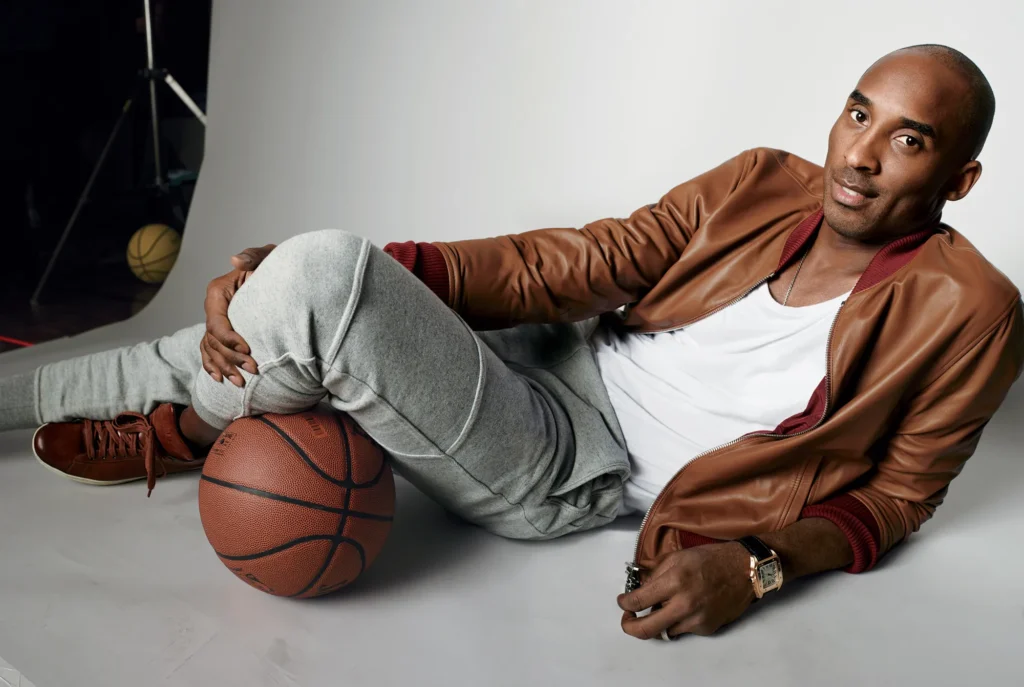
Bryant’s success can be viewed through several connected characteristics: preparation, consistency, adaptability, competitiveness, and a willingness to accept uncomfortable work. Talent opened the door, but talent alone could not explain two decades of elite performance.
His longevity was particularly impressive. An athlete’s career is limited by physical decline, injuries, fatigue, and competition from younger players. Bryant had to repeatedly modify his game as his body changed. Early in his career, athleticism and explosiveness were major weapons. Later, footwork, shooting, positioning, experience, and basketball intelligence became increasingly important.
The Lakers’ official record shows how extensive that career became: 1,346 games, five championships, 18 All-Star selections, 11 First Team All-NBA selections, and 33,643 career points.
The deeper lesson is that excellence requires adaptation. A strategy that works at age 20 may not work at age 35. Bryant’s ability to evolve helped him remain effective even as the physical advantages of youth diminished.
What Made Sam Zell So Successful?
Zell’s success was rooted less in physical performance and more in judgment. He developed an ability to examine markets, assets, management teams, and financial circumstances while searching for opportunities that others might overlook.
His investment philosophy emphasized value rather than popularity. That approach can be difficult because buying distressed assets often means acting when the broader market is pessimistic. Investors need patience, capital discipline, and confidence in their analysis.
His career also demonstrates the importance of understanding incentives. In business, the best-looking deal is not always the best deal. Debt, management quality, market timing, operational problems, and economic cycles can dramatically change the outcome.
Zell’s long career across hundreds of companies demonstrates how much can be accomplished through accumulated knowledge. Equity Commonwealth described his business career as spanning more than six decades.
Lessons From Kobe Bryant and Sam Zell
The most useful lesson from comparing these two men is not that athletes should invest like real estate entrepreneurs or that investors should behave like basketball players. The real lesson is that high-level performance has transferable principles.
Preparation matters. Bryant prepared for opponents, situations, and pressure. Zell prepared by studying investments and markets. Both recognized that important decisions become easier when you understand the environment before acting.
Discipline matters too. A talented basketball player who does not train eventually loses his advantage. An investor who stops studying markets can eventually misunderstand changing conditions. Skill requires maintenance.
There is also a lesson about reputation. Bryant built a global reputation around excellence and competitiveness. Zell built a reputation around entrepreneurship and contrarian investing. Reputation can create opportunities, but it can also create expectations. Once people associate a person with excellence, maintaining that reputation requires continuous performance.
Their Different Approaches to Risk
Bryant and Zell both faced risk, but the nature of that risk was completely different. Bryant risked physical injury, professional failure, criticism, and the possibility of losing important games. Zell risked capital, business relationships, corporate performance, and financial consequences.
Bryant’s risk was often immediate and visible. A missed shot appeared on the scoreboard within seconds. Zell’s risk could take years to reveal itself. A property investment or corporate acquisition might look promising initially and then perform differently as economic conditions changed.
This difference teaches an important lesson: risk cannot be understood without context. A risky decision is not necessarily a bad decision. The critical questions are whether the risk was understood, whether the potential reward justified it, and whether there was a reasonable plan for dealing with failure.
Their Approach to Long-Term Legacy
Legacy is one of the strongest similarities between Bryant and Zell. Both men built careers long enough that their identities became larger than individual achievements.
Bryant’s legacy rests on championships, records, international success, cultural influence, and the philosophy associated with his name. The Basketball Hall of Fame recognized him posthumously in 2020, preserving his place among the sport’s most important players.
Zell’s legacy rests on companies, investments, real estate structures, entrepreneurial education, and the people influenced by his approach. Equity Commonwealth announced his death in May 2023 and described his role as chairman and his broader contributions to investment and business.
The difference is that Bryant’s legacy is largely cultural and sporting, while Zell’s is primarily economic and institutional.
Why Their Stories Still Attract Attention
People remain interested in Kobe Bryant because his career represents an unusually powerful combination of talent, ambition, adversity, and achievement. His death in 2020 made his legacy even more emotionally significant, while his accomplishments continue to influence younger generations.
People remain interested in Sam Zell because his career provides a window into American entrepreneurship, real estate, investment strategy, and corporate risk. His story contains both extraordinary success and major failures, making it more complicated than a simple success story.
When the names appear together, readers may naturally wonder whether there is a hidden connection. Sometimes there is a specific event behind a search query; sometimes the association comes from online content, social media, or search algorithms. That is why checking primary and institutional sources matters.
Common Misunderstandings About Kobe Bryant and Sam Zell

One common mistake is assuming that two names appearing together online automatically means the individuals had a major relationship. Search engines are designed to connect information based on relevance, popularity, and user behavior, not necessarily because two people worked together.
Another mistake is turning similarities into evidence of collaboration. Bryant and Zell certainly shared characteristics such as competitiveness and ambition, but those similarities do not establish a business partnership.
A third mistake is overlooking the complexity of both careers. Bryant was not simply a basketball scorer; he was a defender, leader, teammate, entrepreneur, storyteller, and mentor. Zell was not simply a real estate investor; he built companies, invested across industries, supported education, and participated in major corporate transactions.
Understanding these distinctions produces a more accurate picture of both men.
Kobe Bryant and Sam Zell in Popular Online Searches
The phrase “Kobe Bryant and Sam Zell” can attract curiosity because both names carry enormous recognition in their respective fields. Bryant is immediately associated with basketball excellence, while Zell is associated with investment and entrepreneurship.
For content creators, this is a reminder that keyword research should never replace fact-checking. A keyword can tell you what people are searching for, but it cannot automatically tell you why they are searching for it.
A high-quality article should answer the user’s likely question without manufacturing a story. If readers want to know whether Bryant and Zell worked together, the responsible answer is to examine reliable records and state what those records support.
This is especially important for biographies. Once incorrect information enters search results, it can be copied from one website to another until repetition starts looking like evidence. Repetition is not proof.
The Importance of Separating Fact From Association
The biggest takeaway from researching Kobe Bryant and Sam Zell is the importance of distinguishing documented facts from speculation.
Bryant’s basketball legacy is exceptionally well documented. The NBA, Lakers, Hall of Fame, and USA Basketball provide detailed records of his achievements.
Zell’s business legacy is also extensively documented through his companies, institutional organizations, and major publications. His career included Equity Group Investments, major real estate investments, corporate leadership, and philanthropic support for entrepreneurship and education.
What is not equally established is a major direct connection between the two. That does not make the comparison pointless. In fact, it makes the comparison more interesting because it allows readers to study two independent examples of high achievement without forcing them into a fictional shared narrative.
Conclusion
Kobe Bryant and Sam Zell represent two dramatically different paths to extraordinary achievement. Bryant built his legacy through basketball, transforming natural talent into a 20-year career with five NBA championships, an MVP award, 18 All-Star selections, and a place in the Basketball Hall of Fame. Zell built his legacy through entrepreneurship and investing, developing Equity Group Investments and becoming one of the most influential figures in modern American real estate.
Their stories intersect more naturally as a comparison than as a documented partnership. Bryant demonstrates the power of preparation, competitive discipline, adaptation, and personal development. Zell demonstrates the importance of opportunity recognition, financial judgment, patience, and the willingness to operate in uncertain environments.
Neither story is perfect, and that is precisely why both remain valuable. Bryant’s career contained injuries, setbacks, and difficult moments. Zell’s career contained major successes alongside controversial and unsuccessful investments. Studying both men honestly means recognizing the achievements without pretending that either career was free from risk or failure.
Ultimately, the phrase “Kobe Bryant and Sam Zell” is best understood as an invitation to compare two powerful legacies rather than as proof of a major relationship between them. One changed the way millions of people thought about basketball excellence. The other helped reshape modern investment and real estate. Their fields were different, but their stories demonstrate a shared principle: lasting achievement comes from repeatedly making difficult decisions, learning from experience, and building something that remains meaningful after the original career is over.
FAQs About Kobe Bryant and Sam Zell
Who was Kobe Bryant?
Kobe Bryant was an American professional basketball player who spent his entire 20-year NBA career with the Los Angeles Lakers. He won five NBA championships, earned the 2008 NBA MVP award, became an 18-time All-Star, and was inducted into the Naismith Memorial Basketball Hall of Fame in 2020.
Who was Sam Zell?
Sam Zell was an American entrepreneur and investor best known for his work in real estate and his leadership of Equity Group Investments. He also chaired several publicly traded companies and was recognized for his influence on the development of the modern REIT industry.
Did Kobe Bryant and Sam Zell work together?
Reliable sources reviewed for this article do not establish a major direct professional partnership between Kobe Bryant and Sam Zell. Their careers are extensively documented separately, so claims of a significant business relationship should be supported by a specific reliable source before being treated as fact.
What do Kobe Bryant and Sam Zell have in common?
Both developed reputations for intense competition, preparation, confidence, and long-term thinking, although they applied those qualities in very different fields. Bryant applied them to professional basketball and entrepreneurship, while Zell applied them primarily to investment, real estate, and business.
Why are Kobe Bryant and Sam Zell searched together?
The reason for the combined search term is not definitively established by the reliable sources reviewed. Online searches can associate public figures for many reasons, including articles, discussions, business topics, or user interest. The safest approach is to distinguish a search association from a documented personal or professional relationship and more.
