


Table of Contents
What RarefiedTech.com Covers in Fintech
Latest RarefiedTech.com fintech coverage is centered on the practical side of financial technology rather than treating fintech as a vague collection of apps, cryptocurrencies, and banking buzzwords. The site’s dedicated fintech category currently includes articles covering payments, lending, digital banking, AI, financial inclusion, data, website infrastructure, and other technology-driven changes affecting financial services. Its own description of the fintech section specifically highlights areas such as AI in finance, embedded finance, open finance, digital lending, BNPL, payments, neobanking, digital identity, RegTech, APIs, cybersecurity, tokenization, stablecoins, and financial inclusion. This broad approach matters because modern fintech rarely fits into one neat box anymore: a payment company may also provide lending, a retailer may offer financial products, and a banking app may use machine learning behind the scenes. For readers, that means the most useful fintech reporting is not simply a list of new products; it explains what the technology does, who benefits, what risks exist, and how businesses or consumers might actually use it. RarefiedTech positions its fintech coverage around that practical decision-making angle, describing its goal as helping readers understand financial technology and make more informed choices.
The Main Financial Technology Themes
The latest material from RarefiedTech shows several themes appearing repeatedly across its fintech coverage. Artificial intelligence, real-time payments, digital lending, embedded finance, financial inclusion, and data analytics are particularly important because they connect technology directly to financial outcomes. The site’s recent fintech articles discuss how AI can support underwriting and fraud controls, how instant payment infrastructure changes treasury operations, and how alternative data can help lenders serve people who may have limited traditional credit histories. This is a useful way to understand fintech in 2026: instead of asking whether a technology is fashionable, ask what financial problem it solves. Does it make payments faster? Does it lower administrative costs? Can it reduce fraud? Does it make credit more accessible without creating unacceptable risk? Those questions turn fintech from a buzzword into something measurable. RarefiedTech’s current category also demonstrates that fintech intersects with ordinary financial behavior, including household budgeting and digital banking, showing that financial technology is not limited to banks and venture-backed startups.
Why Practical Fintech Coverage Matters
Financial technology moves quickly enough that yesterday’s assumptions can become today’s outdated advice. A payment method that once required several business days may now be expected to settle almost instantly, while an underwriting process that once required manual document review can increasingly be supported by automated models. This creates a challenge for anyone researching fintech: technical features alone do not tell the whole story. Security, compliance, customer experience, data quality, operational resilience, and integration costs can be just as important as the headline innovation. RarefiedTech’s recent fintech coverage repeatedly approaches these trade-offs from an applied perspective, including discussion of model monitoring, regulatory considerations, security controls, settlement infrastructure, and user experience. That makes the latest RarefiedTech.com fintech material particularly relevant to readers who want to understand not just what changed, but why the change matters.
The Latest Fintech Trends on RarefiedTech.com
The current RarefiedTech fintech category provides a useful snapshot of where financial technology discussion is heading in 2026. Recent articles include coverage of payment and lending trends, financial inclusion, AI in financial services, fintech website architecture, and practical financial management. One especially notable theme is the movement from experimental technology toward operational technology. AI is no longer discussed only as a futuristic possibility; current coverage examines how models can influence underwriting, fraud detection, customer support, and financial operations. Real-time payments are similarly moving beyond the novelty stage because instant settlement changes how companies think about liquidity, reconciliation, and transaction monitoring. Embedded finance is another important development because financial services can now appear inside products that customers do not traditionally associate with banking. The result is a financial ecosystem that feels less like a collection of separate institutions and more like a network of connected services. For businesses, that creates opportunities to improve convenience and reach new customers. For consumers, it creates more choice—but also increases the importance of understanding who actually provides the financial service and how their money and data are protected.
AI and Automated Financial Decisions
Artificial intelligence is one of the strongest themes in current fintech reporting. RarefiedTech’s recent AI coverage describes applications ranging from fraud detection and automated underwriting to personalized banking, document processing, and customer communication. One example cited by the site describes a lender reducing a loan decision process from 48 hours to approximately three minutes through automation. That kind of change illustrates why financial institutions are investing heavily in AI: time itself can become a competitive advantage. A customer who can receive a decision quickly may be less likely to abandon an application, while an institution that automates repetitive work can potentially redirect employees toward higher-value tasks. Yet faster decisions are not automatically better decisions. Financial models can produce errors, inherit biases from their training data, or behave differently when economic conditions change. RarefiedTech’s fintech coverage therefore emphasizes versioning models, logging inputs and outputs, maintaining human review for unusual cases, and building interpretability into the development process. The key lesson is simple: AI in fintech needs both engineering discipline and financial accountability.
Real-Time Payments and Digital Transactions

The rise of real-time payments changes much more than the speed displayed on a customer’s phone. When money moves immediately, companies must rethink liquidity, treasury operations, reconciliation, fraud monitoring, and transaction controls. RarefiedTech’s recent payments coverage argues that instant settlement can require changes to pricing and liquidity models, while businesses may need stronger monitoring and throttling mechanisms to manage rapid transaction flows. Imagine a business that previously had several days between initiating a transaction and seeing the final settlement. That delay provided time to reconcile accounts and resolve certain exceptions. With instant payments, that breathing room shrinks dramatically. The benefit is obvious—customers and merchants receive funds faster—but the operational demands also increase. This is why real-time payments should be viewed as infrastructure rather than merely a faster checkout button. Businesses adopting them need reliable APIs, transaction monitoring, clear settlement procedures, and strong fraud controls. For readers following the latest RarefiedTech.com fintech developments, real-time finance is therefore one of the most important areas to watch.
Digital Lending and Smarter Credit
Digital lending is another major part of the fintech landscape covered by RarefiedTech. Modern lenders increasingly use APIs, automated document processing, cash-flow information, alternative data, and machine learning to make credit decisions faster. The potential advantage is particularly significant for people and small businesses that may not fit neatly into traditional credit-scoring systems. A small merchant, for example, may have years of transaction history but limited conventional borrowing history. A modern underwriting system can potentially evaluate those cash flows alongside other information to create a broader picture of financial capacity. RarefiedTech’s current fintech material discusses AI-powered credit scoring and alternative data while emphasizing that responsible implementation requires model versioning, monitoring, explainability, and human review. This is an important distinction. Smarter lending does not simply mean approving more loans. It means making better-informed decisions while protecting borrowers and lenders from unnecessary risk. As digital lending expands, readers should pay attention to transparency, affordability assessments, data permissions, interest costs, dispute processes, and the ability to explain why a particular credit decision was made.
BNPL and Alternative Credit Models
Buy now, pay later services and marketplace lending demonstrate how fintech can redesign familiar financial products. Instead of visiting a bank for a conventional loan, consumers may encounter short-term financing directly inside an online checkout. Businesses can similarly access working capital through platforms that analyze sales and transaction data. This convenience can be powerful, but it can also make borrowing feel almost invisible. RarefiedTech’s recent fintech analysis argues that BNPL and marketplace lending should be treated as regulated financial products rather than simply as convenient payment features. It highlights affordability checks, transparent credit controls, monitoring of alternative data, and clear customer disclosures as important safeguards. That perspective is increasingly relevant because the easier borrowing becomes, the easier it can be to underestimate its cost. For fintech providers, responsible product design means putting important information directly in front of customers instead of burying it behind several screens. For users, the basic rule is equally straightforward: convenience should never replace understanding. Before accepting any financing offer, consumers should know the total cost, repayment schedule, consequences of missed payments, and how the provider handles disputes.
Embedded Finance and Banking-as-a-Service
Embedded finance is changing where people encounter financial services. Instead of requiring customers to leave an application and visit a separate bank, financial features can be integrated into software, marketplaces, ecommerce platforms, payroll systems, and other digital products. RarefiedTech’s fintech coverage describes embedded finance as a model in which non-bank platforms can offer products such as cards and credit lines through APIs and financial infrastructure providers. The attraction is easy to understand: customers want fewer steps, while businesses want deeper relationships with users. A marketplace might offer seller payments, a software platform might provide business financing, or an ecommerce company might build payment tools directly into checkout. But embedded finance also creates a responsibility problem. The company whose logo customers see is not necessarily the institution actually holding funds, underwriting credit, or providing regulated services. That means partnerships, licensing arrangements, compliance responsibilities, data security, and customer-support processes become critical. For businesses exploring this model, the smartest strategy is usually to begin with a clearly defined financial use case rather than trying to become a bank overnight.
Fintech and Financial Inclusion

One of the most promising aspects of fintech is its potential to expand access to financial services. RarefiedTech’s current coverage describes how mobile wallets, digital banking, alternative credit models, and real-time payment infrastructure can reduce geographic and cost barriers for underserved populations. The impact can be meaningful because access to an account is often the starting point for other financial activities such as saving, receiving payments, building transaction records, obtaining credit, or accessing insurance. Digital onboarding can also reduce the need for customers to travel to a branch or complete lengthy paper forms. But inclusion is not simply a technology problem. A beautifully designed financial app is not useful if users cannot afford the data connection, lack access to reliable identification, distrust the institution, or cannot understand the terms. Poorly designed automated credit models can also reproduce discrimination if their underlying data is incomplete or biased. Effective financial inclusion therefore requires a combination of accessible technology, transparent pricing, strong consumer protection, reliable infrastructure, and thoughtful regulation.
Fintech Security, Regulation, and Risk
Security is the foundation underneath almost every fintech innovation. The more financial activity moves online, the more valuable financial accounts and transaction systems become targets for fraud, credential theft, identity attacks, and operational disruption. Current RarefiedTech coverage treats security and regulation as integral parts of fintech development rather than afterthoughts. Its discussions of AI-powered credit, for example, emphasize explainability, bias mitigation, traceable data, and model transparency. This is important because financial technology operates in an environment where mistakes can have immediate monetary consequences. A software bug may be inconvenient in one industry but financially devastating in another. Strong fintech products therefore need layered security, identity verification, access controls, monitoring, encryption, incident-response procedures, and clear governance. Regulation also matters because financial innovation must operate within rules designed to protect customers and maintain market stability. The challenge for fintech companies is finding a balance: excessive friction can damage user experience, while insufficient controls can create serious financial and reputational risks.
Data Analytics and Personalization in Fintech
Data has become one of fintech’s most valuable resources because financial services generate enormous amounts of information. Payment histories, transaction patterns, account activity, customer interactions, and business cash flows can all potentially provide useful signals. RarefiedTech’s recent coverage of data analytics in fintech discusses machine learning, graph analytics, streaming pipelines, fraud detection, faster lending decisions, and personalized services as major applications. The opportunity is compelling: instead of waiting for periodic reports, financial platforms can analyze events as they happen. A fraud system can flag unusual activity, a lender can update risk assessments, and a personal finance application can identify spending patterns. Yet data abundance can become a weakness if organizations collect information without a clear purpose or fail to protect it properly. Good fintech analytics therefore requires more than sophisticated algorithms. Data quality, governance, privacy, access controls, model monitoring, and explainability all influence whether the resulting system deserves trust. Personalization should make financial services more useful, not turn customers into invisible experiments.
How to Use RarefiedTech.com Fintech Coverage
Readers can get more value from RarefiedTech by treating its fintech articles as a research starting point rather than as isolated pieces of content. The dedicated fintech category currently brings together articles on payments, lending, digital banking, financial inclusion, technology infrastructure, and other related subjects. Start with the topic that matches your objective. If you are a business owner, payment infrastructure and embedded finance may be more relevant than consumer budgeting. If you are researching digital lending, focus on underwriting, BNPL, alternative data, and regulatory considerations. If you are simply trying to understand where financial technology is heading, AI, real-time payments, digital banking, and financial inclusion provide a useful foundation. The best approach is to compare several articles rather than relying on one headline. Look for recurring ideas, identify the assumptions behind recommendations, and verify important financial or regulatory claims against primary sources when making high-stakes decisions. RarefiedTech itself describes its fintech content as practical and applied, with attention to functionality, security, accessibility, efficiency, and trade-offs.
What Makes the Latest RarefiedTech Fintech Content Useful
The strongest characteristic of the latest RarefiedTech.com fintech coverage is its emphasis on connecting technology with practical financial outcomes. Rather than describing AI, payments, lending, or APIs purely as technical subjects, the site’s recent articles repeatedly ask what businesses and users should actually do with those technologies. Its fintech trends article, for example, recommends focused experiments and measurable indicators such as approval rates, settlement latency, and compliance readiness rather than adopting technology simply because competitors are doing so. That approach is valuable because fintech projects can become expensive very quickly. A company does not need every new financial technology; it needs the technologies that solve its particular problems. The site’s broader mission also describes RarefiedTech as covering fintech, gadgets, news, and software, with an emphasis on helping individuals and businesses navigate an evolving digital landscape. For readers, this creates a useful framework: follow the technology, but always bring the discussion back to cost, security, usability, compliance, and measurable results.
Conclusion
The latest RarefiedTech.com fintech coverage reflects a financial technology sector that is becoming faster, more connected, and increasingly dependent on data and automation. Current material on RarefiedTech highlights AI-powered financial decisions, real-time payments, digital lending, BNPL, embedded finance, financial inclusion, data analytics, and the security and regulatory challenges surrounding these developments. The important shift is that fintech is no longer simply about creating a mobile banking application or replacing a traditional financial process with software. Modern fintech is becoming an infrastructure layer that connects payments, credit, banking, commerce, identity, data, and customer experiences.
For consumers, following these developments can make it easier to understand the financial tools appearing in everyday life. For businesses, the coverage provides useful questions to ask before adopting new technology: What problem does this solve? What data does it require? How secure is it? What happens when the system fails? Who is responsible for compliance? And can the results actually be measured? Those questions are more valuable than chasing every new fintech buzzword.
As financial technology continues evolving through 2026, the most important innovations may not always be the most glamorous ones. Reliable payment rails, responsible AI, better security, transparent lending, accessible digital accounts, and trustworthy data systems can have a much larger long-term impact than flashy features. That is what makes keeping up with the latest RarefiedTech.com fintech coverage useful: it provides a practical lens through which readers can understand where financial technology is moving and why those changes matter.
FAQs
1. What is RarefiedTech.com fintech?
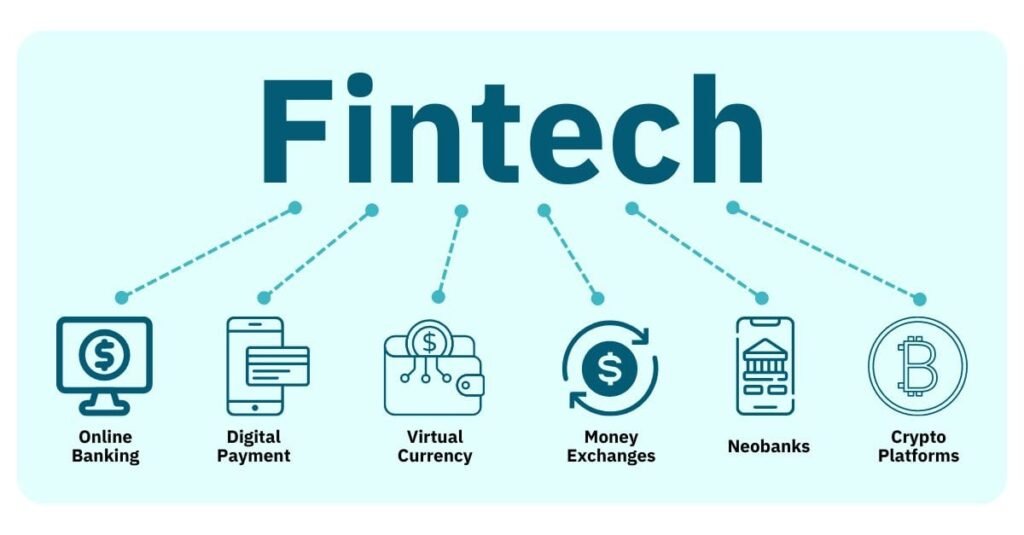
RarefiedTech.com fintech refers to the site’s coverage of financial technology and related developments. Its current fintech category includes subjects such as AI, payments, digital lending, neobanking, embedded finance, financial inclusion, APIs, cybersecurity, and data-driven financial services.
2. What are the latest fintech topics covered by RarefiedTech?
Recent coverage includes AI in financial services, real-time payments, lending, BNPL, embedded finance, financial inclusion, data analytics, and digital banking. The site’s fintech archive provides a current collection of these topics.
3. Why is AI important in fintech?
AI can help financial companies automate underwriting, detect fraud, process documents, personalize services, and improve customer support. RarefiedTech’s recent coverage also emphasizes that AI systems need monitoring, explainability, model governance, and human review where appropriate.
4. How is fintech improving financial inclusion?
Fintech can reduce geographic and administrative barriers through mobile wallets, digital banking, alternative credit scoring, and faster payment infrastructure. These tools can help people who have historically had limited access to conventional financial services, although affordability, digital access, trust, and responsible data use remain important challenges.
5. What should businesses watch in fintech in 2026?
Businesses should closely monitor AI-powered automation, real-time payments, embedded finance, digital lending, data analytics, cybersecurity, and regulatory developments. The most useful technology is not necessarily the newest technology; businesses should prioritize solutions that produce measurable improvements in revenue, efficiency, customer experience, or risk management and more.
