


Table of Contents
If you are searching for fix zenvekeypo4 software issue, there is a good reason to slow down before downloading the first “repair tool” you find. The name Zenvekeypo4 is not accompanied by a consistently documented product identity in the public information currently available online. Different websites describe the term in different ways, which means it would be risky to pretend that there is one confirmed Zenvekeypo4 error, one official repair utility, or one universal fix. The practical approach is to troubleshoot the actual behavior on your computer rather than blindly troubleshooting the name itself. Is the program crashing? Is Windows showing an unfamiliar notification? Did the name appear only inside a browser? Did you download a file containing the name? Those details change the solution completely. Think of the software name as a clue rather than a diagnosis. Once you determine where it came from, what changed, and what your computer is actually doing, you can work through a much safer troubleshooting process.
What Is the Zenvekeypo4 Software Issue?
A Zenvekeypo4 software issue can refer to several different situations, and the exact meaning depends on where you encountered the term. You might have an application that refuses to open, a process that crashes, an installer that fails, a browser notification that displays the name, or a downloaded file that Windows flags as suspicious. These situations can look similar to an ordinary user because all of them may produce an unfamiliar message on the screen. But the underlying cause can be completely different. A genuine application problem may be caused by damaged files, incompatible software, permissions, insufficient resources, or an incomplete installation, while an unexpected browser warning may have nothing to do with a legitimate installed application at all. That is why the first goal should not be “find the Zenvekeypo4 fix.” The first goal should be identify what Zenvekeypo4 actually represents on your device.
The safest troubleshooting mindset is simple: identify, verify, scan, repair, and recheck. Start by recording the exact message and locating where it appears. Then determine whether there is an actual application, executable file, browser extension, or downloaded package connected with the name. After that, check the publisher and location of the file rather than trusting its filename. If the source is uncertain, a security scan should happen before you start disabling protection or installing additional utilities. Only after you establish that a legitimate application is involved should you move into normal software repair steps. This approach takes a few extra minutes, but it can prevent a much bigger problem caused by installing an untrusted “fix.”
Why the Name Is Difficult to Verify
One of the biggest challenges with Zenvekeypo4 is the lack of a consistently documented technical identity. Current online results contain conflicting descriptions, with some pages presenting the term as software and others warning that the name may appear in questionable browser messages or unverified downloads. Because these descriptions disagree, it is not responsible to claim a specific feature set, exact system requirement, confirmed release number, or official error-code database without reliable primary documentation. A search result appearing on several websites does not automatically mean that the information has been independently verified. Several pages can repeat the same unsupported claim and make it look authoritative.
This uncertainty changes how you should troubleshoot. If you know that a program is installed from a verified vendor, you can usually look for its official documentation, release notes, support page, and known issues. With an unfamiliar name, you first need to establish those basics. Check Settings > Apps > Installed apps in Windows and search for the exact name. If nothing is there, do not immediately conclude that the software is hidden or broken. The name may have come from a browser page, a file, an advertisement, an extension, or a misleading warning. Treating an unknown name as a trusted application can lead you toward unsafe downloads, which is precisely what careful troubleshooting is designed to prevent.
Identify Where the Problem Appears
Before changing settings, ask one simple question: Where exactly did I see Zenvekeypo4? This is one of the most useful diagnostic questions because it separates several completely different scenarios. If the message appears inside a program you intentionally installed, you can investigate that application’s files, settings, permissions, compatibility, and update status. If the message appears only in Chrome, Edge, Firefox, or another browser, the problem may involve notifications, an extension, a redirect, or a website rather than an installed desktop application. If it appeared immediately after downloading a file, the file itself deserves attention before anything is opened. And if the name appears during Windows startup, Task Manager, or an unexpected security alert, you need to identify the associated executable and its location.
Take a screenshot if necessary, but remove passwords, authentication codes, personal addresses, financial information, and other private details before sharing it. Also write down what happened immediately before the message appeared. Did you install something? Visit a particular website? Click a notification? Update Windows? Connect a new device? Download a ZIP file? These small details can function like footprints at a scene. Instead of guessing, you are building a timeline. A reliable timeline makes troubleshooting dramatically easier because you can connect the first appearance of the problem with the most likely change that triggered it.
Installed Application vs. Browser Warning
A browser warning deserves special attention because modern browsers can display notifications that look surprisingly similar to Windows system messages. A page may use alarming language, flashing graphics, fake progress bars, or urgent instructions to make you believe your computer has a serious problem. If the Zenvekeypo4 message appears inside a browser tab or as a browser notification, do not automatically assume that Windows has detected a genuine Zenvekeypo4 application problem.
Instead, close the suspicious page without downloading anything it recommends. Review the browser’s notification permissions and installed extensions. Remove permissions for websites you do not recognize, particularly if the messages began after clicking an unfamiliar page. You should also avoid calling phone numbers shown in unexpected security warnings or installing remote-access programs because a pop-up tells you to do so. A genuine troubleshooting process should begin by identifying the source of the warning, not by obeying it.
Common Symptoms of a Zenvekeypo4 Problem

The symptoms associated with an unfamiliar software-related name can vary considerably. A program might refuse to launch, close immediately, freeze during startup, become extremely slow, or display an error after an update. An installer may stop halfway through or report that required files are missing. A browser-based service may appear to work but fail when connecting to a server, while a local application may operate normally when offline. Each symptom provides a different clue, so describing the problem precisely is more useful than simply saying that “Zenvekeypo4 is not working.”
For example, a crash that happens immediately after opening often points toward application files, dependencies, permissions, compatibility, or a damaged configuration. A program that worked yesterday but became unstable after a system update may have a compatibility conflict. A program that becomes slow only when connected to the internet may have a network, server, or synchronization issue. Meanwhile, repeated pop-ups that continue after the browser is closed deserve a different investigation because they may be caused by notifications, extensions, startup items, or unwanted software. Do not put every symptom into one category. The symptom is the starting point for the diagnosis.
Check Whether Zenvekeypo4 Is Actually Installed
The next step is surprisingly important: verify whether Zenvekeypo4 exists as an installed application. On current Windows systems, open Settings and go to Apps > Installed apps, then search for the exact term. Microsoft provides this area as the standard way to review applications installed on Windows. If you find the program, inspect its publisher information and available options before changing anything. If it does not appear, search the Start menu and consider whether the name may have appeared in a browser, a downloaded filename, or another application’s message instead.
If you locate an application with the name but cannot identify its publisher or installation source, be cautious. Do not assume that the application is legitimate simply because it has an attractive icon or a professional-looking name. Look at the installation location and consider when it appeared. If you recently installed another application and the unfamiliar program appeared at the same time, that relationship may be important. The goal is not to panic and delete everything unfamiliar. The goal is to establish provenance. Knowing where software came from is often more valuable than knowing what its filename says.
Record the Exact Error Before Making Changes
When an error appears, resist the temptation to immediately click through every option. First record the exact wording, error code, application name, and time of the failure. If Windows shows a specific code, write it down exactly, including letters, numbers, hyphens, and punctuation. A tiny difference can lead to an entirely different diagnosis.
Also record what action caused the error. For instance, “crashes when opening” is much more useful than “doesn’t work.” “Fails after selecting Save” is better than “has an issue.” “Only happens when connected to Wi-Fi” is better than “sometimes freezes.” This level of detail allows you to compare the problem against legitimate documentation or support information later. It also prevents a common troubleshooting mistake: changing several things at once and then losing track of which change helped or made the situation worse.
Restart the Application and Computer
It sounds almost too simple, but restarting is still one of the best first troubleshooting steps. A temporary process conflict, locked file, incomplete background task, or memory problem can sometimes disappear after the application and operating system start fresh. Close the application completely rather than leaving it minimized. If it remains running in the background, open Task Manager and check whether the process is still active before restarting it.
If the application continues to fail, restart the computer. This clears many temporary states and gives Windows an opportunity to reload services and drivers. After restarting, test the application before launching several other programs. If it suddenly works, you have learned something useful: the original failure may have been temporary rather than a permanent installation problem. If it fails again in exactly the same way, move to the next diagnostic step instead of repeatedly restarting.
Check Updates and Compatibility
Software and operating systems need to agree about how they communicate. A program designed around older Windows components can sometimes behave unpredictably after an operating-system update, while a newly updated application can expose problems with older drivers or dependencies. Before making advanced changes, check whether Windows and the application have available updates from legitimate sources.
If the program is older, Windows includes a Program Compatibility Troubleshooter that can help identify compatibility problems. Microsoft also recommends compatibility troubleshooting and current device drivers when older applications do not function correctly on newer Windows versions. Do not download a random “compatibility fixer” from a third-party website simply because it contains the word Zenvekeypo4. Use the operating system’s built-in tools whenever possible.
Compatibility problems can also occur because of architecture differences, permissions, graphics drivers, or missing dependencies. If the program worked before a particular update, record that fact. A clear “worked before X, failed after X” timeline is valuable evidence. It is much better than randomly changing Windows settings and hoping something sticks.
Repair or Reset the Application
If you have confirmed that Zenvekeypo4 is a legitimate installed application and Windows provides repair options for it, try those before completely reinstalling the software. Microsoft documents a repair path through Settings > Apps > Installed apps > Advanced options > Repair for supported applications. If Repair is unavailable or does not solve the issue, some applications also provide a Reset option.
Repair is attractive because it can address damaged application components without immediately removing everything. Reset is more aggressive and can return supported apps to a cleaner state, potentially removing stored settings or application data. Because the exact behavior of Repair and Reset can differ between applications, read any warning Windows provides before confirming the operation. If the software stores important local information, back it up first if the application’s documentation provides a safe way to do so.
The important point is to use these functions only after confirming that the application is actually the thing causing the problem. If Zenvekeypo4 never appears in Installed apps and the name exists only inside a suspicious web page, repairing an unrelated Windows application will not solve the underlying issue.
Reinstall or Remove an Unwanted Application

If a verified application is genuinely damaged and repair does not work, reinstalling can be a reasonable next step. First uninstall the existing copy using Windows’ normal application-management tools. Microsoft documents Settings > Apps > Installed apps > Uninstall as one of the standard removal methods.
After removal, restart the computer if requested and obtain the replacement installer only from a source you can verify. Avoid websites offering modified installers, cracked versions, “activated” copies, or emergency repair packages. Those downloads introduce another layer of risk and can make the original problem much harder to diagnose.
If the application is unfamiliar and you cannot verify its publisher or purpose, removal may be safer than reinstalling it. However, do not delete random system files manually. An executable with a strange filename is not automatically malicious, and a legitimate Windows component can also look unfamiliar. Investigate the file location, publisher, digital signature where available, and security scan results before making a destructive decision.
Scan for Malware and Suspicious Files
Security scanning becomes particularly important if the Zenvekeypo4 name appeared unexpectedly. Do not assume that an alarming message is genuine, but do not dismiss an unexplained file either. Windows Security provides several scan types, including Quick scan, Full scan, Custom scan, and Microsoft Defender Offline. Microsoft describes Offline scanning as a way to scan after restarting into a recovery environment, which can make it harder for persistent malware to hide.
Start with a normal scan and follow the security software’s recommendations. If you have stronger reasons to suspect persistent malware, an Offline scan can be appropriate. Save your work before running it because the computer will restart. Review the results afterward rather than assuming that a clean quick scan proves everything is safe.
Most importantly, do not disable antivirus protection simply because a website claims it is preventing Zenvekeypo4 from working. Security warnings should be investigated, not automatically bypassed. Adding an unknown program to an antivirus exclusion list can turn a confusing software problem into a security incident.
Check Browser Notifications and Extensions
If the Zenvekeypo4 message appears only while browsing, examine the browser before touching Windows system files. Unwanted website notifications can create repeated pop-ups even after you leave the original site. Extensions can also change search behavior, redirect pages, inject advertisements, or interfere with normal browsing.
Review the browser’s notification permissions and remove sites you do not recognize. Then review installed extensions and disable or remove anything you did not intentionally install. If the problem disappears after an extension is disabled, you have identified an important clue. You can then investigate that extension rather than reinstalling Windows.
Do not click a “fix now” button simply because a notification uses urgent language. A browser page cannot prove the health of your entire computer merely by displaying a frightening message. Treat unexpected security claims as untrusted until independently verified.
Check Internet and Network Problems
Some software problems are actually communication problems. If the application opens correctly but cannot sign in, synchronize information, retrieve content, or connect to a service, examine the network connection before reinstalling anything. Test other websites or applications to determine whether the problem is isolated or system-wide.
Restart your router if appropriate, reconnect to the network, and temporarily test whether another trusted connection behaves differently. If you use a VPN, proxy, corporate firewall, or security gateway, those systems can sometimes affect application connectivity. However, do not permanently disable security controls just to make an unfamiliar application work. On a business or school computer, network settings may be managed by an administrator, so changing them independently could create additional problems.
If the software works offline but fails online, record that distinction. It can point toward authentication, server availability, DNS, firewall, or connection issues rather than damaged application files.
Look for Conflicting Software
Two applications can sometimes interfere with one another. Security products, overlays, system optimizers, screen-recording tools, virtualization software, graphics utilities, and background automation programs can all interact with other applications. If the Zenvekeypo4 issue began immediately after installing another program, consider that installation part of the timeline.
Do not uninstall several applications at once. That destroys useful diagnostic information. Instead, identify the most likely recent change and investigate it carefully. If the problem disappears after a controlled change, document what happened before making additional modifications.
Startup programs are another possible source of conflicts. Microsoft recommends reviewing unnecessary startup applications when diagnosing performance problems because programs running automatically can increase background activity.
Check Windows Performance and Storage
A program may appear to be broken when the computer is simply under heavy resource pressure. Check available storage, memory usage, processor activity, and background processes. If the system drive is nearly full, Windows and applications may have less room for temporary files and updates. If memory usage remains extremely high, applications can become sluggish or unresponsive.
Open Task Manager and look for unusually heavy CPU, memory, disk, or network activity. Do not terminate unfamiliar processes simply because their names look strange. Instead, identify what launched them and where the associated file is located. A process name alone is rarely enough to determine whether something is legitimate.
Removing genuinely unnecessary applications can also improve performance. Microsoft recommends uninstalling unused apps and managing unnecessary startup activity as part of general Windows performance optimization.
Use Windows Troubleshooters
When ordinary troubleshooting does not resolve the issue, use Windows’ built-in troubleshooting tools rather than downloading an unknown utility. Windows provides troubleshooters for various categories, and Microsoft currently documents the Program Compatibility Troubleshooter for software compatibility problems.
The advantage is trust and transparency. You know that the tool belongs to the operating system instead of relying on a random executable that promises to “repair” dozens of problems. Built-in troubleshooting will not solve every software issue, but it can identify common configuration and compatibility problems without introducing another unknown variable.
If the troubleshooter reports a specific problem, record the result. Do not immediately run ten additional utilities afterward. Good troubleshooting works like a funnel: begin broad, collect evidence, narrow the possibilities, and then apply the smallest effective fix.
When System Recovery Makes Sense
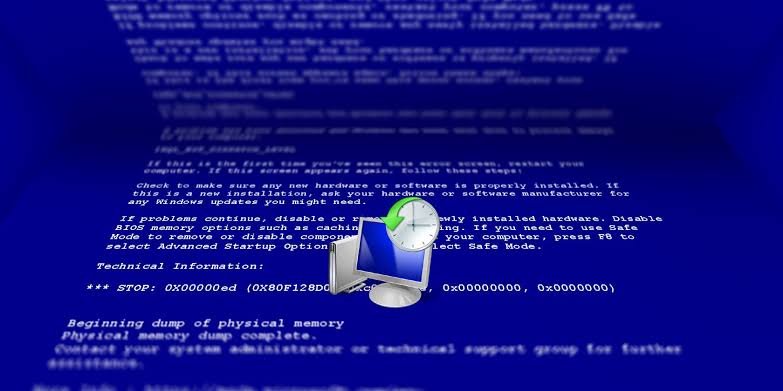
System recovery should be treated as a later step, not the first solution. If the computer has widespread problems that began after a significant change, Windows provides several recovery options. Microsoft recommends starting with less disruptive options before moving toward more drastic recovery procedures.
Depending on the Windows version and situation, available options can include troubleshooting, uninstalling a problematic update, System Restore, reinstalling Windows, or resetting the PC. The more aggressive options can affect applications, settings, and data, so backups are essential.
A complete PC reset is particularly serious. Microsoft explains that resetting Windows can remove applications and settings, and some reset choices can remove personal files as well. Back up important data and make sure you understand the selected option before proceeding.
If your only problem is one unfamiliar name in a browser notification, resetting the entire computer would be excessive. Recovery should match the scale of the problem.
Mistakes to Avoid When Fixing Zenvekeypo4
The most dangerous troubleshooting mistake is trusting the problem message itself. If an unexpected pop-up says your computer is infected and demands that you download a tool, call a number, pay money, or give someone remote access, stop. The message may be attempting to create urgency rather than provide legitimate technical assistance.
Another mistake is downloading software from the first search result. Search engines can return pages that discuss an unfamiliar term without establishing that the page is an official source. A polished website is not proof of legitimacy. Verify the publisher and source before running executable files.
Avoid these common shortcuts:
- Do not disable antivirus protection simply to install unknown software.
- Do not add suspicious applications to security exclusions.
- Do not delete Windows system files because their names look unfamiliar.
- Do not install multiple “PC cleaners” to fix one error.
- Do not give remote access to an unknown person offering a repair.
- Do not reset the entire computer before backing up important data.
- Do not assume every browser warning is a Windows system alert.
- Do not treat repeated third-party descriptions as proof of an official Zenvekeypo4 product.
A safe fix is not necessarily the fastest-looking fix. It is the fix that solves the problem without creating a second one.
Quick Troubleshooting Checklist
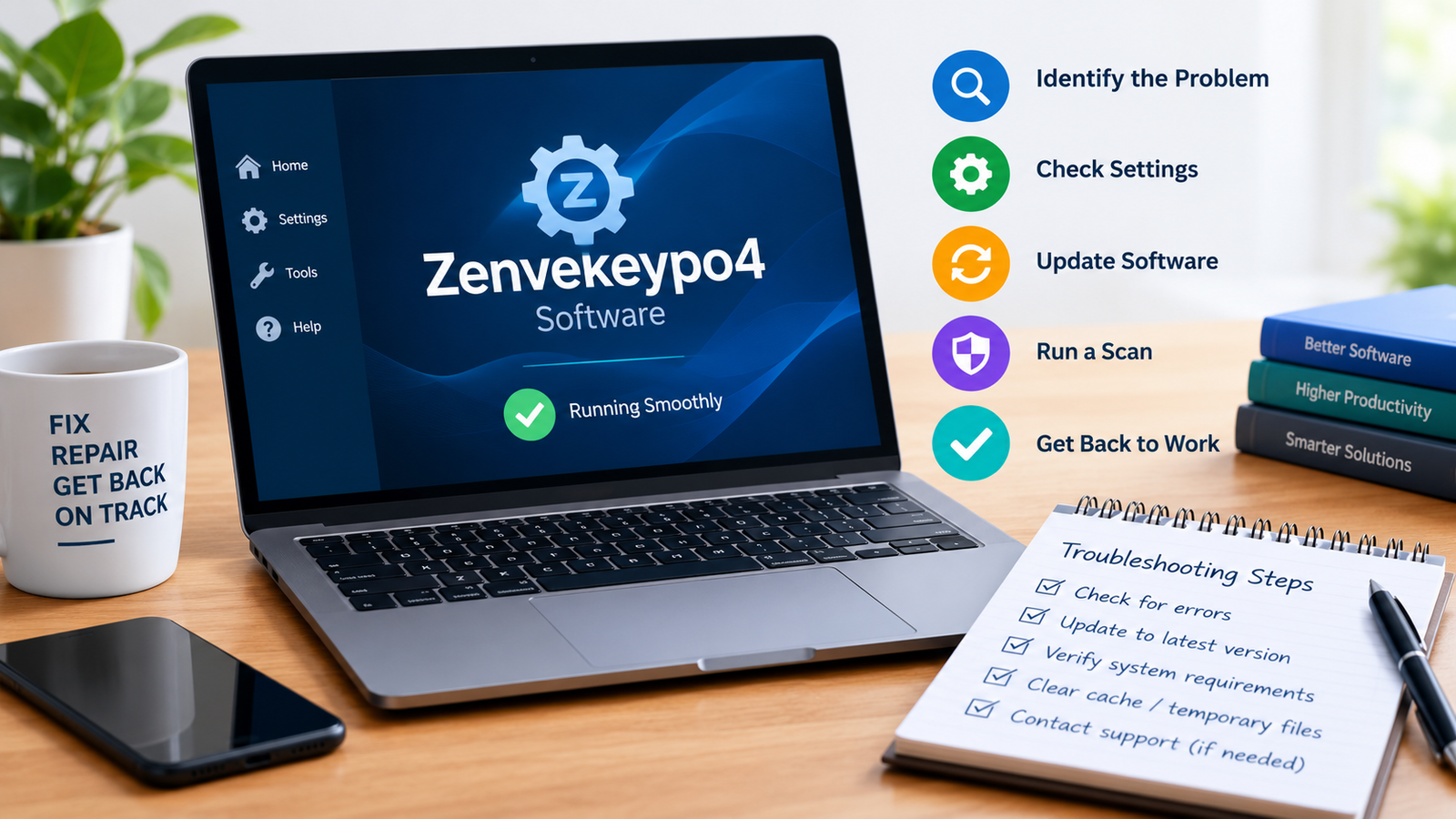
If you need a simple process to fix Zenvekeypo4 software issue, work through the following sequence:
- Record the exact message. Save the error wording and code.
- Identify the source. Determine whether it appeared in Windows, an installed application, a browser, or a downloaded file.
- Check Installed apps. Search Windows for Zenvekeypo4.
- Verify the publisher. Do not trust an unfamiliar application automatically.
- Restart the application and PC.
- Check legitimate updates.
- Try Windows Repair if the verified application supports it.
- Use Reset only when appropriate and understand what it changes.
- Uninstall suspicious software through normal Windows tools.
- Run Windows Security scans if the software or message is unexpected.
- Review browser notifications and extensions if the issue appears online.
- Check network and system resources if the application connects slowly or freezes.
- Use Windows troubleshooters for compatibility and installation problems.
- Consider recovery only as a later step and back up important files first.
This checklist works because it moves from low-risk actions to higher-impact actions. You are not immediately deleting files or reinstalling the operating system. You are collecting evidence first.
Conclusion
The best way to fix zenvekeypo4 software issue is not to assume that the unusual name represents one confirmed software product with one known bug. Current public information about Zenvekeypo4 is inconsistent, so the safest approach is to identify exactly where the name appears and what is happening on the device. If it is a legitimate installed application, use standard Windows troubleshooting methods such as checking updates, repairing the application, investigating compatibility, reinstalling from a verified source, and scanning for security threats. If the name appears only in a browser warning, notification, or suspicious download, treat that situation differently and investigate the browser or file rather than assuming you have a normal software crash.
The central lesson is simple: diagnose before you repair. Record the error, identify the source, verify the software, scan when appropriate, and make one controlled change at a time. This approach may feel slower than downloading an instant “fix,” but it is far more reliable and much safer. When an unfamiliar software name appears on your computer, good troubleshooting is less about guessing the answer and more about asking the right questions until the evidence points to it.
Frequently Asked Questions
Is Zenvekeypo4 a verified software product?
Public information currently available online does not provide a consistently verified product identity, developer history, technical manual, or authoritative version record for Zenvekeypo4. Different websites describe the term differently, so it is safer to verify what the name refers to on your particular device instead of relying on an unverified description.
How do I fix Zenvekeypo4 if it will not open?
First determine whether an actual Zenvekeypo4 application is installed. If it is, restart Windows, check for legitimate updates, and look under Settings > Apps > Installed apps for available repair options. If the program remains broken, investigate compatibility and consider reinstalling it only from a source you can verify.
What if Zenvekeypo4 appears as a browser pop-up?
Do not automatically treat the pop-up as a genuine Windows error. Close the suspicious page, review browser notification permissions and extensions, and run a security scan if you downloaded anything or notice other unusual behavior. Avoid clicking “fix” buttons, calling phone numbers, or installing remote-access software promoted by an unexpected warning.
Should I download a Zenvekeypo4 repair tool?
You should not download a repair tool merely because a website claims it is required. Because the public identity of Zenvekeypo4 is unclear, an unverified repair utility could introduce additional risk. Prefer Windows’ built-in repair, troubleshooting, uninstall, and security features whenever they are appropriate.
When should I reset my Windows PC?
A complete reset should generally be a last-resort recovery measure for serious or widespread problems, not a first response to one unfamiliar software message. Back up important files before using recovery options and understand whether your selected reset method removes applications, settings, or personal data. Microsoft recommends trying less disruptive recovery options first and more.
