


Table of Contents
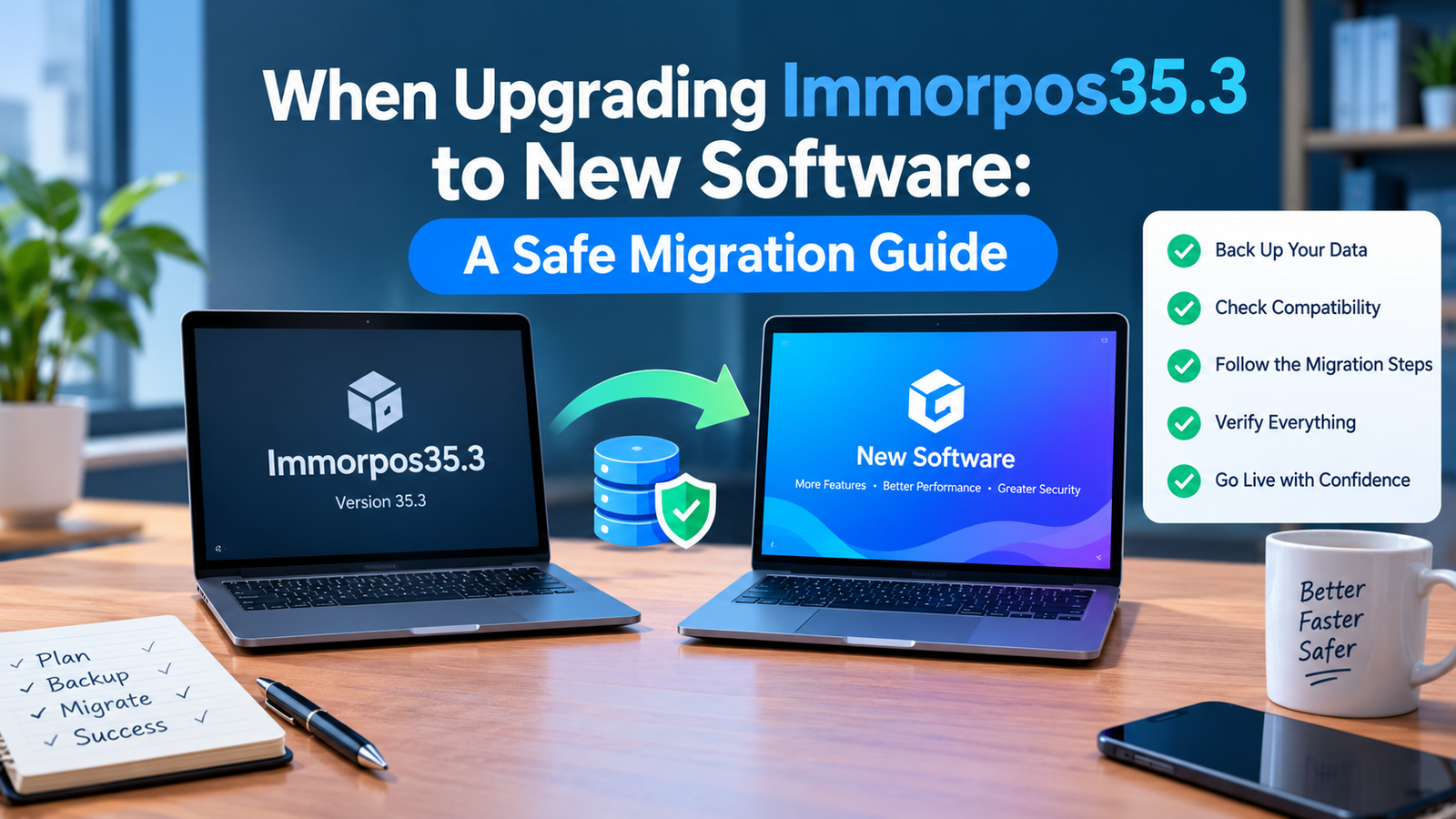
When upgrading Immorpos35.3 to new software, the biggest mistake is treating the process like a simple installation. A migration is more like moving a busy shop from one building to another while keeping the doors open: the furniture, records, electrical connections, staff routines, security arrangements, and customer-facing services all have to move without creating unnecessary disruption. The first challenge is that Immorpos35.3 is not clearly documented as a widely recognized commercial software product in authoritative public software sources, so it would be risky to invent a specific upgrade button, vendor procedure, database structure, or replacement product. Current online results contain conflicting descriptions of the name, with some pages presenting it as business software and others saying there is insufficient public evidence to establish it as a recognized product. That uncertainty changes how an upgrade should be approached. Instead of blindly following a supposed “Immorpos35.3 upgrade method,” the safer strategy is to identify exactly what is installed in your environment, determine where its data lives, document the functions your organization actually uses, and then select a supported replacement or newer system based on those requirements. Microsoft’s current migration guidance similarly emphasizes identifying the applications, settings, user data, and files that actually need to move before beginning a migration. The result is a controlled transition rather than a gamble with operational data.
What Immorpos35.3 Means Before You Upgrade
Before making any technical change, establish what the label Immorpos35.3 actually represents in your environment. A filename, application title, internal version number, database label, or old documentation reference can easily be mistaken for the formal name of a commercial product. Public search results currently do not provide a consistent, authoritative identity for Immorpos35.3, which means an organization should not assume that an online article accurately describes its own installation. Instead, inspect the actual machine or server where the software operates. Record the application name displayed by the operating system, the publisher shown in the file properties, the installation directory, the executable files, version and build information, configuration files, database location, connected services, and any licensing details. If the system was installed by a previous employee, contractor, vendor, or internal IT team, look for deployment notes and old invoices or support records as well. This investigation may sound slow, but it can prevent a much larger problem later. Imagine ordering replacement parts for a machine without first identifying the machine model; even a technically excellent part can be useless if it does not fit. Software migration works the same way. The goal is to establish a factual baseline before deciding what “upgrading” actually means.
Why the Software Identity Matters
Software identity matters because an upgrade and a replacement are fundamentally different operations. An upgrade normally means moving from one supported version of the same application to another version while preserving compatible settings and data. A replacement means moving from one product or system to another, which can require data conversion, new integrations, redesigned workflows, new user permissions, and different reporting structures. If Immorpos35.3 is an internal application, an old deployment label, or a customized system rather than a mainstream product, there may be no conventional upgrade path at all. In that situation, searching for an “Immorpos35.3 update file” could lead users toward unofficial downloads or misleading instructions. A better approach is to identify the business functions first and then determine which supported technology should perform those functions going forward. Microsoft’s migration guidance recommends identifying applications and application settings that are actually required for the destination environment rather than blindly moving everything from the source system. This principle is especially useful here. Instead of asking only, “How do I install the new version?” ask, “What information, functionality, integrations, and controls must still work after the transition?” That question produces a migration plan that is much easier to test, explain, and recover if something goes wrong.
Why Moving From Legacy Software Requires Planning
Legacy software often becomes deeply connected to an organization over time. People create spreadsheets around it, employees memorize shortcuts, managers depend on specific reports, and other applications quietly exchange information with it. Some connections may be obvious, while others may exist in scripts, scheduled jobs, shared folders, database queries, printers, scanners, payment systems, APIs, or manually maintained procedures. This is why a migration that looks small on paper can become surprisingly complicated once work begins. Current guidance from CISA emphasizes change management, testing and validation, and monitoring software end-of-life conditions as part of maintaining operational systems. The same principle applies when replacing an unfamiliar legacy application. Before changing production, document what the current system does and identify which parts of the environment depend on it. You should also decide what success means. Is success simply getting the new program to open? Usually not. A successful migration should preserve the information that matters, maintain critical workflows, keep required integrations functioning, protect access controls, and allow employees to complete normal tasks. The more important the system is to daily operations, the less sensible it becomes to improvise during the cutover. Planning transforms an uncertain technical change into a sequence of controlled decisions.
The Difference Between an Upgrade and a Replacement
The distinction between an upgrade and replacement deserves special attention because it determines the entire migration strategy. If a supported vendor provides a documented in-place upgrade from the current version to a newer version, the process may preserve much of the existing configuration. If no verified vendor path exists, however, the organization may need a replacement migration in which information is extracted from the old environment and transformed for the new one. These approaches have different risks. An in-place upgrade can introduce compatibility problems with drivers, plugins, databases, or custom code, while a replacement can introduce mapping errors because fields, workflows, reports, and permissions may not have direct equivalents. Microsoft’s migration documentation specifically distinguishes between migration scenarios and encourages organizations to determine what should actually be transferred before deployment. For Immorpos35.3, that distinction is particularly important because the product’s public identity is uncertain. If your local installation turns out to be a custom application, you may need developer assistance rather than a generic software installer. If it turns out to be a component of another product, the correct migration procedure may belong to that parent platform. Therefore, determine the technical identity first, then choose the migration method, rather than selecting a migration method based only on the name.
Audit Your Existing Immorpos35.3 Environment
A proper audit should create a practical map of the existing environment. Start with the users: who accesses the system, what permissions they have, and which departments depend on it? Then document the data: what databases, documents, records, reports, configuration files, exports, templates, and historical records exist? After that, map integrations such as email services, payment providers, accounting systems, inventory platforms, authentication services, printers, scanners, APIs, and external databases. Do not forget scheduled processes. A system may automatically export a report every evening or synchronize records every hour without any employee touching it. Those automated connections can be the easiest things to overlook during migration. Microsoft recommends identifying user settings, applications, application settings, and personal data during migration planning, while CISA recommends using change-management processes and validating changes before deployment. Create a simple inventory document and give each item an owner. Mark each dependency as critical, important, optional, or obsolete. This creates a baseline against which the new software can be tested. It also reveals opportunities to clean up the environment before migration. There is little value in transferring years of obsolete files, abandoned accounts, duplicate records, or unused integrations if they are not needed by the destination system.
Record Data, Integrations, Users, and Dependencies
The inventory should be specific enough that another technically competent person could understand the environment without guessing. Record the operating system, application version, database engine, storage location, server or workstation names, network dependencies, authentication method, user groups, external integrations, custom scripts, scheduled tasks, and important hardware. For data, record approximate volume, file formats, database tables where known, retention requirements, and any known data-quality problems. If the system contains customer, financial, employee, inventory, or other sensitive information, document the security controls that protect it. This information becomes your migration checklist. For example, if the old system connects to a printer that produces labels, that printer should appear as a test requirement for the new system. If managers depend on a monthly report, the equivalent report must be validated before the migration is declared successful. If employees authenticate through a particular identity system, access testing must include representative accounts rather than only an administrator account. The point is to turn vague knowledge into measurable requirements. A migration can fail even when every database record is technically copied because the surrounding workflow no longer works. By documenting dependencies, you make those hidden requirements visible before production is affected.
Define What the New Software Must Do
Choosing new software should begin with requirements rather than brand names. Write down the tasks that the current environment supports and separate essential capabilities from convenient extras. Consider data entry, reporting, search, user management, automation, integrations, hardware support, exports, security controls, audit trails, backups, and administrative functions. Then identify requirements that the old system may not have handled well, such as stronger authentication, easier reporting, better compatibility with modern operating systems, centralized administration, or improved support. This is also the right moment to identify requirements that should not be carried forward. Legacy systems often accumulate workarounds because employees adapt to limitations. If those workarounds are copied into the new platform without examination, the organization can reproduce the same inefficiencies in a newer interface. A useful requirements document should describe what users need to accomplish, not merely which buttons they currently press. For example, instead of writing “keep the old export screen,” write “users must be able to export daily transaction records in CSV format and preserve required fields.” That wording gives the migration team a testable requirement and allows different technologies to satisfy it. The destination system should be judged by whether it fulfills verified operational needs, not by whether it looks identical to the old software.
Create a Complete Backup Before Migration
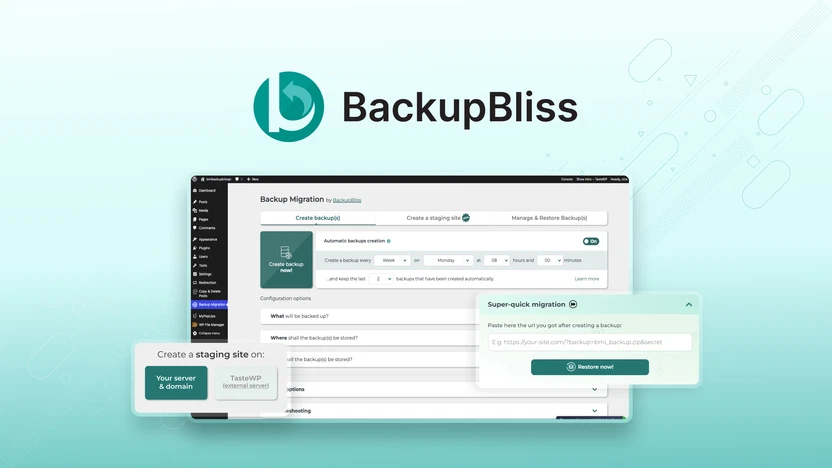
A backup is the safety net beneath the entire migration. Before changing production software, create a reliable copy of critical data and configuration, and do not assume that a successful backup message means recovery is guaranteed. NIST’s 2026 OT Backup Quick Start Guide emphasizes integrating backups into change management, creating backups regularly, testing them, and reviewing recovery procedures through exercises. CISA guidance similarly recommends maintaining backups and testing their availability and integrity rather than simply creating them and forgetting them. For a migration, consider more than the primary database. Depending on the application, you may need configuration files, document repositories, user settings, certificates, licenses, scripts, templates, custom reports, integration credentials stored through approved methods, and application installers. Keep at least one recovery copy separate from the system being changed. If ransomware, hardware failure, accidental deletion, or a bad migration damages the live environment and the backup is connected to the same system, the backup may be affected too. The exact backup method depends on the technology involved, but the principle is universal: preserve a known-good restoration point before making an irreversible change.
Test the Backup Instead of Assuming It Works
Testing the backup is where many migration plans become real rather than theoretical. A backup that cannot be restored is not a dependable recovery mechanism. NIST’s current backup guidance recommends recurring restoration tests on non-production systems to validate backup media and practice recovery procedures. For your migration, restore the backup into an isolated test environment if the technology permits it. Check whether the application opens, whether the database is consistent, whether required files are present, and whether users can perform representative tasks. Confirm that the restoration process itself is documented well enough for another administrator to follow. Record how long restoration takes because recovery time matters if production migration fails. If encryption, certificates, licenses, or external dependencies are required, determine how those will be restored as well. A backup should not be treated like a sealed emergency box that nobody opens until disaster strikes. Treat it more like a spare tire: its existence is useful, but you only know whether it will help when you verify that it is usable. Testing also gives the team confidence about the rollback process before production is touched.
Build a Safe Testing Environment
A staging or test environment gives you somewhere to discover problems without discovering them through real customers or employees. Ideally, it should resemble production closely enough to expose compatibility issues involving the operating system, database, integrations, hardware, permissions, and configuration. CISA’s patch-management guidance recommends testing changes in a testbed or simulator and performing operational tests before production deployment. Microsoft also recommends testing migration processes before deploying them broadly. Use representative, appropriately protected data rather than exposing sensitive production information unnecessarily. Test normal workflows and edge cases. Try large imports, unusual characters, missing values, duplicate records, long-running reports, failed network connections, expired sessions, printer failures, permission restrictions, and interrupted operations where relevant. If the new system will integrate with other applications, test those connections instead of assuming they will work because both products claim compatibility. A staging environment should answer practical questions: Can the system start? Can users authenticate? Can data be found? Can required reports be generated? Can integrations exchange information? Can administrators recover from an error? The more realistic the test, the less likely production will become the first place where a serious defect appears.
Check Data and Database Compatibility
Data migration deserves special attention because copying information is not the same as preserving its meaning. The old system may store dates, currencies, identifiers, status codes, addresses, names, categories, permissions, and historical records differently from the new system. Some fields may have no direct destination equivalent. Others may require transformation before import. A new database might enforce rules that the old system did not, causing previously accepted records to fail validation. Character encoding can also create subtle problems when names or notes contain accented letters, non-Latin scripts, symbols, or unusual punctuation. Start by creating a mapping between source fields and destination fields. Identify fields that require conversion and define rules for handling missing, duplicate, invalid, or obsolete data. Run a sample migration before attempting the entire dataset. After import, compare record counts, totals, representative records, timestamps, relationships, and important business calculations. Do not rely solely on a message saying “import complete.” An import can technically complete while still producing incorrect results. For critical information, create reconciliation checks that prove the destination contains the expected values. Microsoft’s migration planning guidance specifically emphasizes determining what data and settings need to move and avoiding unnecessary restoration of application information that the destination does not use. That is a useful rule: migrate intentionally, validate systematically.
Plan Integrations and Hardware Compatibility
A new application may work perfectly by itself and still fail operationally because it cannot communicate with the rest of the environment. Review every external connection before migration. That includes payment systems, accounting software, email, authentication providers, inventory systems, reporting tools, cloud services, printers, barcode scanners, card readers, storage systems, APIs, and network services where applicable. Hardware deserves its own compatibility test because older peripherals sometimes depend on drivers or interfaces that newer software no longer supports. CISA advises organizations to monitor vendor end-of-life announcements for software and hardware and to test and validate changes as part of change-management processes. Do not assume that a device will work because it worked with the old application. Verify supported operating systems, drivers, connection types, authentication requirements, and vendor support status. If an integration uses an API, check the authentication method and data format rather than only testing whether a connection can be established. Also document fallback procedures. If a printer fails during migration, can staff continue using a temporary process? If an external service becomes unavailable, can the core application still operate? Designing these contingencies before launch reduces pressure on the migration team and gives employees a clear response when something behaves differently than expected.
Choose a Migration Method
The migration method should match the risk, complexity, and operational importance of the system. A direct cutover moves users from the old system to the new system at a defined point. It can be straightforward, but it concentrates risk into one event. A parallel migration keeps the old and new systems operating together for a period, allowing results to be compared before the old environment is retired. It can provide valuable confidence but may require duplicate work and careful data synchronization. A phased migration moves departments, locations, users, or functions in stages, reducing the size of each change but increasing coordination requirements. There is no universally correct method. Microsoft documentation on migration planning emphasizes determining the migration scenario and testing the process before broad deployment, while Azure’s current migration guidance recommends performing a test migration before a full-scale migration to discover problems and refine the plan. Consider downtime requirements, data volume, integration complexity, staffing, rollback capability, and the cost of operating both systems. For a poorly documented legacy environment, a staged or parallel approach may provide more opportunities to discover unknown dependencies before everything depends on the new platform.
Phased, Parallel, or Direct Migration
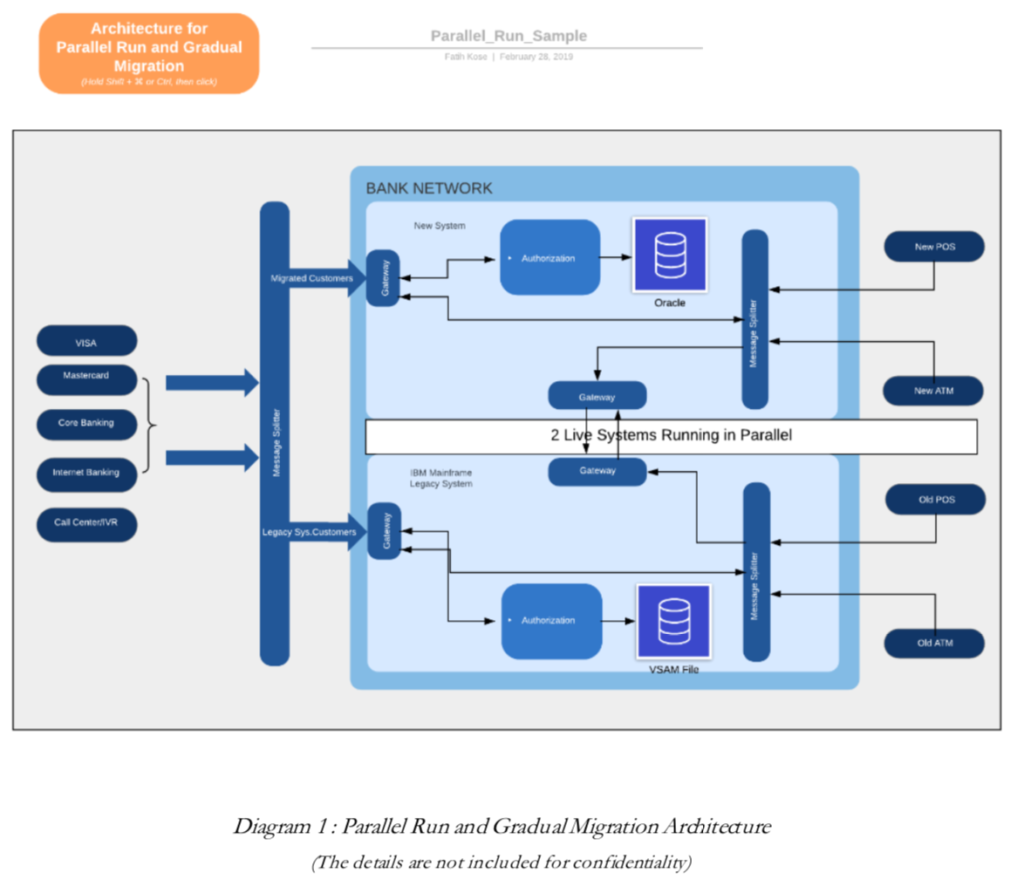
When deciding between approaches, think in terms of reversibility. If you can move a small group first, observe the results, correct problems, and then expand, you have created checkpoints along the road. A direct migration may be appropriate when the environment is simple, well understood, thoroughly tested, and supported by a strong rollback procedure. Parallel operation can be particularly useful when reports or calculations must be compared between old and new systems. A phased approach can reduce organizational shock because employees learn the new workflow gradually rather than all at once. The trade-off is that running two environments can create synchronization problems and additional administrative work. Whatever approach you choose, establish objective exit criteria. For example, do not declare a pilot successful merely because users like the interface. Require critical workflows to pass, data reconciliation to meet predefined tolerances, integrations to operate correctly, and support staff to understand common failure procedures. A migration plan should also state who has authority to stop the rollout. That person should not have to make the decision while watching production fail. The decision rules should already exist. This is what turns a migration from a hopeful launch into a controlled technical operation.
Perform a Trial Migration
A trial migration is one of the most valuable steps when upgrading from an unfamiliar or legacy system. Instead of moving everything immediately, copy a representative subset of the data and run the complete process from extraction through transformation, import, configuration, testing, and user verification. Microsoft explicitly recommends testing migration processes before broad deployment, and its Azure migration guidance says a test migration can help estimate timing and uncover issues before the full migration. The trial should be realistic enough to reveal problems with data mappings, permissions, integrations, reports, performance, and user workflows. Time the process from start to finish. Record errors and categorize them rather than fixing them silently. If the migration takes six hours in testing, do not plan a two-hour production maintenance window simply because the schedule feels convenient. Likewise, if the trial reveals that 4% of records require manual correction, estimate the labor required before production. Run more than one trial when major problems are discovered. The purpose of testing is not to prove that the plan is perfect; it is to discover where the plan is weak while changes are still cheap. Every issue found in a test environment is an issue you do not have to discover under production pressure.
Validate the New Software Before Going Live
Validation should involve more than IT staff. The people who use the system every day often know details that technical teams cannot see from configuration files. Ask representative users to perform realistic tasks using the migrated data. Have them create or edit records, search for historical information, produce important reports, complete normal transactions, and verify that the outputs make sense. Compare results against the old environment where possible. Check permissions using ordinary user accounts, not only administrator accounts. Confirm that audit trails, backups, notifications, exports, integrations, and security controls behave as intended. CISA’s guidance emphasizes testing and validation before operational deployment, while NIST emphasizes verifying backup integrity and recovery capabilities. Create a formal acceptance checklist and record pass/fail results. If something fails, document the problem, its severity, its owner, and the required correction. Do not quietly mark a failed test as “acceptable” unless the risk has been explicitly reviewed and accepted by the appropriate decision-maker. Validation is the bridge between “the software installed successfully” and “the organization can safely depend on the software.” Those statements are not equivalent. A program can launch perfectly while producing incorrect reports, rejecting important records, or breaking a critical integration.
Prepare Users and Document New Workflows
Technology changes are only half of a software migration. The other half is people. Even when the new software is technically sound, employees can struggle if familiar screens, terminology, permissions, reports, or procedures have changed. Start training before the final cutover rather than waiting until the old system disappears. Create short task-based instructions for common activities instead of relying entirely on a large manual. Explain what has changed, what has stayed the same, and where users should go for help. Identify a small group of trained internal users who can answer basic questions during the transition. Documentation should also cover administrative tasks such as account creation, password or authentication procedures, backups, troubleshooting, exports, and escalation. If the organization operates across multiple locations or shifts, make sure every group receives the information it needs. A migration becomes much smoother when employees understand what will happen on launch day. They should know when the old system becomes unavailable, what system they should use instead, how to recognize a genuine error, and how to report problems. This reduces the temptation to improvise. The goal is not to make everyone an expert. The goal is to give every user enough confidence and guidance to perform essential work safely in the new environment.
Create a Rollback and Recovery Plan
A migration plan without rollback is incomplete. Before production deployment, define exactly what will happen if the new system fails. NIST guidance on software asset management identifies rollback and recovery as capabilities that require retaining prior versions so organizations can return to an earlier state when problems are discovered. CISA’s patch-management guidance also describes creating a backup, testing changes, performing operational tests, and maintaining a contingency plan if the change damages the stable environment. Your rollback plan should identify the trigger conditions, responsible decision-maker, technical steps, backup location, estimated recovery time, and communication process. It should also account for data created after the migration begins. Rolling back software is not necessarily enough if new transactions have already been written into a different database format. This is why rollback must be tested before production. If the organization cannot safely return to the old system, the team needs to understand that limitation before the cutover begins. Define a point of no return if one exists. Keep the old environment available for the agreed retention period rather than deleting it immediately after launch. The purpose of rollback is not to encourage failure; it is to ensure that a failure does not become a catastrophe.
Execute the Production Migration
Once planning, backup, testing, training, validation, and rollback preparations are complete, schedule the production migration during a controlled maintenance window. Communicate the schedule to affected users and stakeholders well in advance. Freeze unnecessary configuration changes before the migration so that the production environment matches the version that was tested. Confirm that the latest backup completed successfully and that the recovery process is available. Then follow the documented runbook rather than improvising. Assign clear responsibilities: one person or team manages the technical migration, another monitors business validation, and another coordinates communication if the system is important enough to require separate roles. Record timestamps for major events so problems can be reconstructed later. Avoid unrelated maintenance during the same window. If an unexpected problem occurs, pause and evaluate it against the predefined rollback criteria. Do not continue simply because the team has already invested several hours. A migration is not a race. The objective is to reach a stable operational state with evidence that the system works. When production is ready, begin with the highest-priority validation checks: application availability, authentication, data integrity, critical workflows, integrations, and security controls. Only after those checks pass should the migration be considered operationally complete.
Monitor the System After the Upgrade
The first hours and days after migration are part of the migration, not an afterthought. Monitor application errors, performance, database health, storage capacity, authentication failures, integration failures, network activity, user-reported issues, and unexpected changes in transaction volumes. Compare important reports and totals against the old system where appropriate. Some problems will not appear until real users perform unusual tasks that were not included in testing. Maintain a visible issue log and prioritize problems according to business impact. Avoid making unrelated changes while the new environment is still stabilizing because unnecessary changes can make troubleshooting harder. Keep the old system and recovery materials according to the retention plan. If the organization uses automated monitoring, configure alerts before launch rather than after the first incident. NIST’s 2026 backup guidance emphasizes recovery exercises and maintaining reliable restoration processes, reinforcing the broader principle that resilience requires preparation and verification rather than assumptions. After the stabilization period, hold a short post-migration review. Document what went well, what failed, what required manual intervention, and what should be changed in future migrations. This turns one migration into institutional knowledge instead of forcing the next team to rediscover the same lessons.
Common Mistakes to Avoid
The most common migration mistakes are usually not exotic technical failures. They are ordinary planning failures: assuming the software identity without verifying it, skipping the inventory, backing up without testing restoration, ignoring custom integrations, migrating unnecessary data, failing to test with representative users, deleting the old environment too quickly, and having no clear rollback trigger. Another common error is relying on online articles that describe an unfamiliar product as though its identity and architecture were already established. In the case of Immorpos35.3, publicly available descriptions are inconsistent, so treating one unverified description as official documentation could create unnecessary risk. A safer approach is to use local evidence—installation details, vendor records, system files, internal documentation, contracts, and administrator knowledge—to establish what you actually have. Then apply established migration principles: identify what needs to move, test the process, protect the original data, validate the destination, and maintain recovery options. Microsoft recommends careful migration planning and testing, while CISA and NIST emphasize testing changes, maintaining backups, and validating restoration and recovery procedures. If a migration feels uncertain, slow down at the planning stage rather than speeding up at the deployment stage. Extra preparation is usually cheaper than emergency recovery.
Conclusion
When upgrading Immorpos35.3 to new software, the safest approach is to avoid treating the process as a routine software installation. The public information available about the Immorpos35.3 name is inconsistent, so the first priority should be identifying exactly what the software represents in the environment being migrated. Once its identity, data, dependencies, users, integrations, and operational requirements are documented, the migration becomes much easier to structure. Create and test backups, build a representative test environment, map data carefully, verify hardware and integrations, run a trial migration, train users, and define a rollback procedure before changing production. Current guidance from Microsoft, CISA, and NIST consistently supports these core practices: plan before migrating, test before broad deployment, maintain reliable backups, and verify that recovery procedures actually work. Most importantly, do not invent vendor-specific instructions for an unverified product. Use evidence from the actual installation and documented technical environment. A successful migration is not simply one where the new software starts; it is one where the organization can continue doing its essential work with accurate data, working integrations, trained users, and a tested way back if something unexpected happens.
FAQs About Upgrading Immorpos35.3
Is Immorpos35.3 a verified commercial software product?
There is currently no consistent public evidence establishing Immorpos35.3 as a widely documented commercial software product with a clearly identifiable official vendor, authoritative documentation, and standardized upgrade procedure. Online pages describe the name in different ways, which makes it unsafe to assume that any one description represents the software installed on a particular computer. If you encounter this name in your environment, verify the publisher, executable location, version information, installation records, configuration files, and associated documentation first. If the application belongs to an organization-specific system, the correct migration instructions may come from an internal developer, contractor, vendor, or administrator rather than a generic internet guide. Treat the name as an identifier that requires verification, not as proof of a particular architecture or feature set. This is especially important before downloading replacement installers or migration utilities because an incorrect assumption could lead to data loss, incompatible software, or unnecessary security exposure. The safest starting point is therefore technical identification followed by a documented migration assessment.
Should I delete Immorpos35.3 before installing replacement software?
Usually, you should not delete the old system immediately simply because the replacement software is ready. Removing the old environment too early can eliminate useful recovery options if the migration reveals missing records, incompatible integrations, configuration problems, or unexpected workflow issues. Instead, preserve a verified backup and maintain the old environment according to a defined retention and rollback plan. If the new system needs to be installed on the same machine, determine whether the two applications can safely coexist and whether the old application has services or dependencies that the new software requires. If the replacement uses a separate machine or server, keeping the original environment intact during the stabilization period is often operationally simpler. The exact retention period should depend on the organization’s legal, operational, and recovery requirements. Before decommissioning anything, confirm that important data has been reconciled, required exports have been preserved, users can complete their work, integrations function properly, and recovery procedures are available. Decommissioning should be the final stage of a successful migration, not the first step.
How should I back up data before migration?
The backup strategy depends on the technology behind the system, but the basic principle is to create a known-good recovery point before making major changes. Preserve critical databases, files, configurations, application settings, and other components required to reconstruct the working environment. Keep an appropriate copy separate from the production system, especially when cybersecurity threats or accidental deletion are concerns. Most importantly, test restoration rather than assuming that a successful backup job guarantees recovery. NIST’s 2026 backup guidance recommends recurring restoration tests on non-production systems so organizations can validate backup reliability and practice recovery procedures. CISA similarly recommends maintaining and regularly testing backups as part of ransomware resilience. For a migration, perform at least one realistic restore before production cutover whenever technically feasible. Record the restoration procedure, required credentials or licenses, estimated recovery time, and any dependencies. A backup is valuable only if you can actually use it when the original system is unavailable.
Should I test the new software before moving everyone?
Yes. A test migration should happen before a broad production rollout whenever the system’s importance and technical complexity justify it. Microsoft recommends testing migration processes before deployment to users, and Azure’s migration guidance specifically recommends a test migration to uncover potential issues and refine the full migration plan. The test should use representative data and realistic workflows rather than simply confirming that the application launches. Test user authentication, permissions, searches, reports, imports, exports, integrations, hardware, performance, and error handling. Ask actual users from relevant departments to complete common tasks because they may identify workflow problems that administrators miss. Record the results and repeat the trial after major corrections. The purpose is not to eliminate every possible problem—no test can guarantee that—but to expose predictable failures before production. A staged or pilot rollout can provide another layer of protection when the environment is complex. The more critical the system, the more valuable it is to discover problems while the old system is still available as a controlled fallback.
What should I do if the migration fails?
If a production migration fails, follow the predefined incident and rollback plan instead of making random changes under pressure. First, determine whether the failure affects a critical function, data integrity, security, or only a minor feature. Stop further changes if continuing could make recovery harder. Preserve logs and relevant evidence so the technical team can identify what happened. If the failure meets the rollback criteria established before deployment, use the tested recovery procedure and restore the known-good environment. NIST guidance emphasizes maintaining rollback and recovery capabilities, while CISA’s patch-management guidance recommends contingency planning and tested restoration points when changes can affect operational systems. Communicate clearly with users so they know whether to stop using the new system and where to record work performed during the incident. Once the stable environment is restored, investigate the failure before attempting another migration. Update the migration plan, correct the underlying problem, and run another trial. A failed migration does not necessarily mean the project is impossible; it means the testing or planning process uncovered a condition that needs to be understood before the next attempt and more.
