


Table of Contents
Understanding the Identifier U373378069
The identifier U373378069 is an unusual combination of letters and numbers that may attract attention when it appears in a search result, a database entry, a product listing, or an unfamiliar webpage. People naturally want to know what such a string represents, whether it has a specific meaning, and whether it connects to a recognized product, service, organization, or technical subject. The first step toward answering those questions is to separate what can actually be verified from what merely sounds plausible. A sequence of letters and digits can look official without being a standardized identifier, and its appearance alone does not reveal who created it or why it exists.
Based on the available search results, there is no sufficiently reliable evidence establishing U373378069 as a universally recognized product, software application, organization, or technical standard. Searches for the exact sequence also surface pages discussing miscellaneous identifiers and a potentially confusing scientific term, U-373 MG. However, the existence of similar-looking terms does not prove that they share the same meaning. Anyone researching this identifier should therefore approach it as an unresolved reference until its original source and context can be established. This distinction matters because a responsible explanation should help readers investigate an unfamiliar code without inventing a definition simply to provide a confident-sounding answer.
Why People Search for Unfamiliar Codes
Unfamiliar identifiers frequently become search queries because people encounter them outside the context in which they were created. A person might see a code in a browser address, a document, a product label, a website article, a software log, or a message from a service provider. When there is no explanation nearby, copying the sequence into a search engine seems like the easiest way to discover its purpose. The difficulty is that search engines retrieve pages containing related text, and those pages do not necessarily explain the original source.
The search process can become even more confusing when an identifier has an unusual spelling. A small difference in punctuation, spacing, or capitalization may separate an ordinary reference number from a scientific name or a product model. For example, U373378069 is not written in the same format as U-373 MG, which is a documented name used for a scientific cell line. The visual resemblance between the opening characters is not enough to establish a connection. Readers should begin with the exact sequence they encountered, preserve its original formatting, and investigate the surrounding information before accepting an explanation.
What Does U373378069 Actually Mean?
The most accurate answer is that the exact meaning of U373378069 remains unverified. No dependable evidence identified in the available search results establishes a definitive expansion, official owner, standardized classification, or confirmed purpose for this exact string. That does not mean the sequence is necessarily meaningless. It could be an internal reference, a record identifier, a user-generated label, or a code used in a limited environment that is not well documented publicly. It simply means that the available evidence does not justify selecting one of those possibilities as the correct explanation.
This is an important distinction in online research. When a reader asks what a code means, there is pressure to provide a single, simple answer. Yet a useful answer must reflect the quality of the evidence rather than the desire for certainty. If the original source cannot be located, the appropriate conclusion is that the meaning has not been confirmed. As more contextual information becomes available, the interpretation may become clearer. Until then, any specific claim about who created U373378069, what it identifies, or what it does should be treated as speculation rather than established fact.
The Difference Between a Code and an Established Term
A code is not automatically a recognized technical term. Established terms usually have documented definitions, consistent usage, or a traceable relationship to a product, institution, scientific concept, or technical specification. Codes, by contrast, may be created for private or temporary purposes. An inventory system can assign a unique sequence to an item, for example, without making that sequence meaningful to anyone outside the organization that maintains the database.
This difference explains why some searches produce many pages but very little useful information. A sequence may be repeated by websites that have copied it from another source, or it may appear within automatically generated articles about unrelated identifiers. Repetition creates visibility, but it does not independently establish authenticity. When evaluating U373378069, readers should look for an authoritative source that explicitly identifies the complete sequence and explains its purpose. A page that merely repeats the string, without documentation or supporting references, is not enough to confirm its meaning.
Possible Uses of Alphanumeric Identifiers
Alphanumeric identifiers combine letters and numbers to make individual records or objects easier to distinguish. They are used across numerous fields because they can provide more possible combinations than numbers alone while remaining relatively easy for people and computers to process. Their purposes vary considerably, however, and a code’s format rarely identifies its function with certainty. U373378069 could resemble identifiers used in several settings, but resemblance should be treated as a starting point for investigation rather than proof of a particular use.
Product Codes, Database IDs, and Reference Numbers
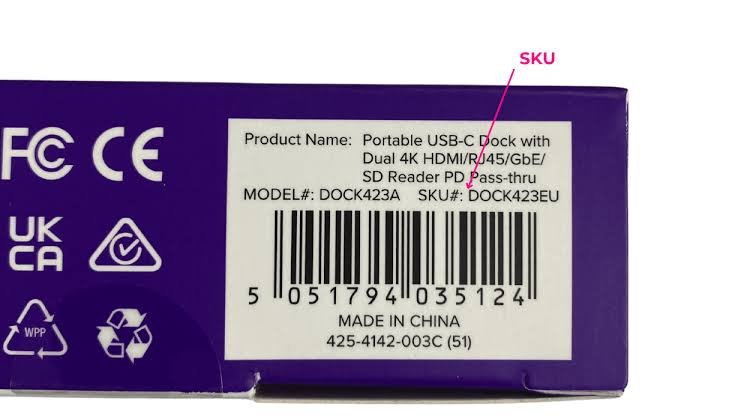
Product codes help businesses distinguish individual items, versions, or configurations. Database identifiers help software systems retrieve records without relying entirely on descriptive names. Reference numbers may also be used in customer support, shipping, financial transactions, research records, and administrative processes. These systems can produce long strings that appear mysterious to anyone who does not have access to the relevant documentation.
| Identifier category | Typical purpose | Evidence needed to verify U373378069 |
| Product or model code | Distinguishes an item or product version | Manufacturer documentation or a matching official listing |
| Database identifier | Points to a record in a digital system | The relevant database or its documentation |
| Order or reference number | Tracks a transaction or request | Confirmation from the issuing organization |
| Software identifier | Distinguishes an application, build, or component | Official release notes, vendor documentation, or system records |
| Research identifier | Identifies a study resource or scientific record | A recognized research database or institutional record |
| Internal label | Organizes information within an organization | Confirmation from the organization that created it |
The table illustrates why the exact source matters more than the appearance of the string. A number assigned by one organization may have no connection to a similar number assigned by another. Even if U373378069 is used as an identifier somewhere, its meaning would depend on the system that created it. Readers should avoid treating it as a universal code unless an authoritative standard or issuing organization confirms that interpretation.
Is U373378069 a Software Name or Technical Identifier?
There is not enough reliable evidence to identify U373378069 as the name of a software application, operating system, programming framework, or downloadable tool. A search result that places a strange sequence near technical vocabulary does not establish that the sequence refers to software. It may instead be a database value, an automatically generated keyword, an unrelated reference, or simply text repeated by a publisher.
If the sequence appears in a software environment, its location can provide useful clues. A message inside an application might identify a transaction or record, while a value shown in a diagnostic log could belong to a component, event, or internal process. A code appearing in a filename might have been selected by a developer or generated by a system. These are general possibilities, not verified descriptions of U373378069 itself. Without the original application, documentation, or surrounding text, assigning a specific technical function would be premature.
Readers should also be cautious about websites offering downloads or installation instructions for an unfamiliar name. Before downloading anything, verify the publisher, check whether the software is documented by an official source, and review the requested permissions. A mysterious identifier is not evidence that a program exists, and a webpage claiming to explain it is not necessarily an authorized source. The safest approach is to establish the identity of the software first and consider installation only when its origin and purpose are clear.
Understanding the Possible U-373MG Confusion
One potentially relevant search result concerns U-373 MG, a documented human brain-tumor cell line used in scientific research. This is a real scientific term, but there is no verified evidence establishing that the longer string U373378069 is an alternative name for it. The distinction is essential: the scientific term may help explain why similar characters appear in some search results, but it cannot be used to define the exact identifier without additional evidence.
The scientific record for U-373 MG also illustrates why precise identification matters. The American Type Culture Collection (ATCC) describes historical authentication concerns involving its U-373 MG stock. According to ATCC, short tandem repeat analysis found that the stock shared an identity with another glioblastoma cell line, SNB-19, and the organization discontinued distribution of that stock. The European Collection of Authenticated Cell Cultures and Sigma-Aldrich also distinguish the original U-373 MG (Uppsala) material from stocks subsequently identified as U-251 MG. These records document a specific issue in scientific cell-line authentication; they do not establish a relationship with U373378069.
The broader lesson is that a small difference in a scientific identifier can change the subject entirely. Researchers rely on exact names, accession numbers, provenance records, and authentication data to distinguish similar materials. The same principle applies to ordinary online research. If someone encounters U373378069 while reading about U-373 MG, they should compare the full strings and consult the original reference rather than assuming the terms are interchangeable.
How to Verify U373378069 Online
The best way to investigate an unfamiliar identifier is to follow a repeatable process. Instead of opening dozens of pages and accepting the first plausible explanation, begin with the original context and work toward sources that can establish ownership and meaning. This approach reduces the risk of confusing unrelated terms or relying on pages that merely repeat one another.
Start With the Exact Search Query
Search for the complete string in quotation marks: “u373378069”. Quotation marks encourage a search engine to look for the exact sequence rather than pages that contain only part of it. Then try the original capitalization and any punctuation that appeared in the source. These small variations can help reveal whether the identifier is consistently documented or appears only in a limited collection of webpages.
After the exact search, inspect the context of each promising result. Does the page identify an organization, manufacturer, database, or publication? Does it explain how the code is used? Are references provided that can be checked independently? A result that displays the identifier only in a heading or keyword list offers little evidence about its actual meaning.
Check Authoritative Sources
The next step is to look for the organization that would be expected to know what the identifier represents. If it appears on a product, search the manufacturer’s official documentation. If it appears in a research paper, consult the publisher, scientific database, or institution responsible for the record. If it appears in software, look for the developer’s documentation or official support resources.
The strength of the evidence depends on the claim being investigated. A manufacturer’s catalogue may establish a product model, but it may not explain an unrelated database reference. Likewise, a scientific database can establish the identity of a cell line but cannot authenticate an unrelated string merely because the two look similar. Reliable verification requires a source that directly addresses the exact identifier.
Compare Independent Evidence
When two or more credible sources identify the same code in the same way, confidence increases, particularly if one source links directly to the issuing organization. However, multiple webpages do not necessarily count as independent confirmation. They may all reproduce the same original text or rely on a common source that has not been verified.
For U373378069, the most useful next piece of evidence would be the page, document, label, or system in which the code first appeared. That context could narrow the search considerably. Until such a source is identified, the responsible conclusion remains that its precise meaning is unknown.
Why Search Results Can Be Misleading

Search engines are designed to help users discover relevant information, but a result appearing near the top of a page is not the same as an independently verified fact. Search results can include official documentation, personal blogs, automatically generated pages, copied articles, and content that mentions a phrase without explaining it. When the search term is unusual, these differences become particularly important because there may be little established information against which to evaluate individual claims.
Searches for U373378069 illustrate this challenge. Some results place the sequence within broad discussions of product identifiers and technical codes, while other pages associate it with collections of unrelated strings. Such pages can offer general ideas about how identifiers work, but they do not establish the specific origin of this one. Readers should distinguish between a page that explains a general concept and a source that directly verifies the subject of their search.
Another issue is repetition. If one website publishes an unverified explanation and other websites reproduce it, the claim may appear increasingly credible simply because it is visible in several places. Yet repetition does not transform an unsupported statement into a documented fact. Before accepting a definition, check whether the sources provide original evidence, identify the responsible organization, or refer to reliable documentation. When those elements are absent, uncertainty is more accurate than an invented explanation.
Privacy and Security Considerations
An unfamiliar code is not inherently dangerous. Many legitimate systems use long identifiers to organize records, manage inventory, or distinguish individual transactions. Nevertheless, the context in which a code appears can affect how you should handle it. If U373378069 comes from a private account, an internal company system, or a personal document, it is sensible to determine whether it contains information that should remain confidential before posting it publicly.
Reference numbers sometimes accompany information that can be used to locate a transaction or access a particular record. Whether that creates a security concern depends on the system and the permissions attached to the identifier. A random-looking sequence should not automatically be treated as a password or authentication token, but it should not be assumed harmless when its source is unknown either.
When investigating an unfamiliar code, avoid uploading sensitive documents to unknown websites or entering account details into pages that promise to decode it. Use official support channels when the identifier is associated with an account, payment, shipment, or service. If the code appears in a suspicious email or text message, independently visit the organization’s official website rather than following an unverified link. These precautions are sensible general security practices; they are not evidence that U373378069 itself is malicious or connected to a security incident.
Common Mistakes When Interpreting Unknown Codes
One common mistake is assuming that every unusual sequence has a hidden meaning waiting to be decoded. Some identifiers are arbitrary values generated by software or assigned according to an internal numbering system. Their meaning may be available only within the system that created them. Trying to interpret the individual letters and digits without understanding that system can produce convincing but incorrect theories.
Another mistake is confusing visual similarity with a verified relationship. The scientific name U-373 MG, for example, resembles the opening characters of U373378069, but the resemblance does not establish that the longer sequence is a scientific identifier. The same caution applies when an unfamiliar code resembles a product model, username, or software version. Verification must come from documentation, not from the imagination of the reader.
A third mistake is treating every search result as equally reliable. An official catalogue, a scientific database, an anonymous forum post, and an automatically generated blog article serve different purposes and offer different levels of evidence. Readers should consider who published the information, whether the publisher has relevant expertise, and whether the claim can be traced to an original source.
Finally, people sometimes mistake the absence of information for proof that something does not exist. The fact that a search does not reveal an authoritative definition for U373378069 does not establish that nobody uses it. The identifier could be private, newly created, poorly indexed, or meaningful only in a specific environment. The correct conclusion is narrower: its meaning has not been verified from the available evidence.
Practical Examples of Identifier Verification
Imagine that someone discovers U373378069 on an online shopping receipt. The first useful step would be to identify the retailer and examine the receipt’s surrounding labels. If the sequence appears beside a product description, the retailer or manufacturer might be able to explain whether it is a model number, inventory reference, or order identifier. Searching the string without the retailer’s name could produce unrelated results and lead to an incorrect conclusion.
Consider a second scenario in which the identifier appears inside a software error message. A reader might reasonably wonder whether it represents an error code. However, the surrounding message, application name, version number, and official troubleshooting documentation would be needed to confirm that interpretation. If the developer does not document the identifier, official support may be the most reliable way to clarify it. There is no basis for assuming that U373378069 is a software error merely because it contains letters and digits.
A third scenario involves a scientific article or laboratory record. Here, the reader should check the publication’s methods, supplementary materials, and referenced databases. If the string is supposed to identify a biological sample, cell line, or research record, its provenance should be documented by an appropriate scientific resource. The documented history of U-373 MG shows why this step matters: even a recognized cell-line name can involve authentication complications, and similar labels should not be treated as interchangeable without checking the evidence.
These examples point toward the same practical principle. The source determines the meaning of an identifier. A string cannot be interpreted reliably from its appearance alone, and a useful explanation must connect it to the system or organization that created it.
Frequently Asked Questions
1. What is U373378069?
U373378069 is an alphanumeric string whose exact meaning has not been established by the reliable sources identified in this research. It may be used in a particular context, but there is insufficient evidence to identify it definitively as a product, software application, official code, or organization. The best way to clarify its meaning is to locate the original webpage, document, or system where it appears.
2. Is U373378069 a software application?
There is no verified evidence establishing U373378069 as a specific software application. Its appearance resembles the kind of identifier that software systems sometimes use, but that resemblance is not proof. Check the official documentation of the application or organization associated with the code before downloading software or following installation instructions.
3. Is U373378069 connected to U-373 MG?
No direct connection has been verified. U-373 MG is a documented scientific cell-line name associated with glioblastoma research, while U373378069 is a different, longer string. Similarity in spelling is insufficient to establish a shared identity or purpose. Scientific claims should be checked against authoritative cell-line records and relevant research documentation.
4. How can I find the real meaning of U373378069?
Start by searching the exact sequence in quotation marks and examining the original context. Look for an official manufacturer, software developer, database, institution, or other source that explicitly identifies the code. Compare independent evidence and avoid relying on articles that merely repeat the identifier without providing documentation. If the code belongs to a private system, contact the organization responsible for it.
5. Is U373378069 safe or dangerous?
The identifier alone does not establish whether something is safe or dangerous. There is no verified evidence in the available research linking this exact string to malware, fraud, or another specific security threat. If it appears in a suspicious message or an unfamiliar download, evaluate the source independently, avoid sharing sensitive information, and use official channels to verify any associated claims.
Conclusion
U373378069 remains an unidentified alphanumeric sequence rather than a verified, universally recognized term. Although online searches can reveal pages that discuss the string alongside product codes, technical identifiers, and similar-looking names, those references do not establish its original purpose. The possible confusion with U-373 MG is particularly important to handle carefully because the scientific cell line has a documented history that is distinct from the unverified identifier discussed here.
The most reliable way to investigate U373378069 is to begin with the exact context in which it appears, consult the organization or system responsible for that context, and compare the available evidence with authoritative documentation. This process helps separate genuine information from assumptions, copied claims, and misleading similarities.
For readers researching unfamiliar identifiers, the central lesson is simple: do not confuse a plausible explanation with a proven one. A code can be meaningful without being publicly documented, and a lack of search results does not prove that it has no use. Until a trustworthy source establishes its identity, treating U373378069 as unverified and context-dependent is the most accurate conclusion and more.
